Protection Stones: How to Choose Yours
Lire cet article en français → https://artisandasie.com/fr/pierres-de-protection-comment-choisir-la-votre/
“Protection” covers very different needs depending on the stone. Some stones ground a mind that feels like it is spilling over. Others deflect what threatens from outside. Others sharpen judgment when a situation calls for presence rather than withdrawal. Seven stones, carried from ancient Egypt to Tibet by way of Rome and the Andean highlands, have been given this function across history. Here is what sets them apart, and how to choose yours.
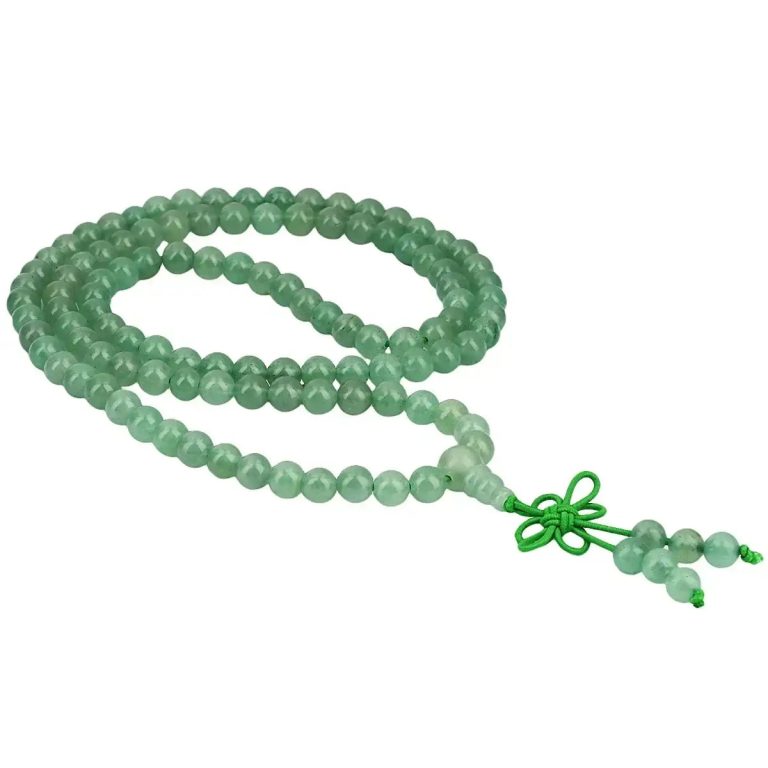
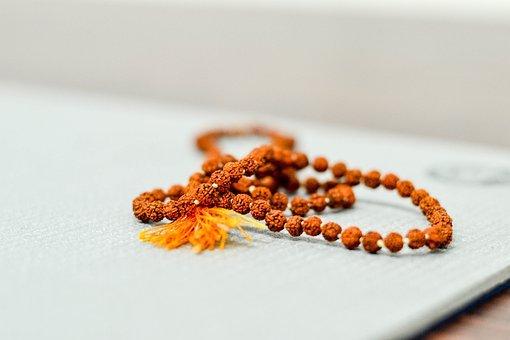
Each of these seven stones is worked as untreated natural stone, cut as a cabochon or round bead depending on the material, then hand-set into a pendant or strung into a 108-bead mala bracelet following the Buddhist tradition of mantra counting. We favor raw, unfilled, uncolored stone, which is why you will see natural variation in tone from one piece to the next, a perfectly uniform stone is almost always a sign of industrial treatment rather than a natural material.
Black Obsidian: Direct Grounding
Obsidian is not a crystal but volcanic glass, formed when high-silica lava cools too fast for minerals to crystallize. That speed of formation explains its conchoidal fracture, sharp as glass, which made it a preferred material for prehistoric blades and arrowheads for tens of thousands of years. Its best-documented protective use comes from Aztec obsidian mirrors, associated with Tezcatlipoca, the “Smoking Mirror,” used by priests for divination and to shield against malevolent spirits. One such mirror, now held at the British Museum, belonged to John Dee, court astrologer to Elizabeth I, proof this belief crossed continents and centuries. In modern lithotherapy, black obsidian is the archetypal grounding stone, a traditional belief, not a demonstrated physical effect. In Chinese tradition, it often accompanies the image of Guan Yu, a figure of loyalty and protective strength. Discover our Black Obsidian Grounding Stone.
Black Tourmaline: The Stone of Terrain
Black tourmaline, or schorl, is a boron cyclosilicate whose name traces to a Saxony mining village documented as early as the 15th century. It forms in granite pegmatites, through magmatic crystallization or hydrothermal deposition, with major sources in Brazil, Sri Lanka, and parts of Africa. Its dark color comes from iron and manganese content. Traditional African healers used it as a talisman against dark spells. In modern lithotherapy, it is the most commonly cited stone for grounding and energetic cleansing, a stone of raw terrain, rarely over-polished, rather than an ornament. Discover our Natural Black Tourmaline Mala Bracelet.
Tiger’s Eye: Clarity and Vigilance
Tiger’s eye is a quartz pseudomorph, silica that replaced fibrous crocidolite atom by atom while preserving its fiber structure, producing the stone’s signature chatoyancy alongside golden brown coloring from iron oxide. Ancient Egyptians set it into deity statues to represent divine vision. Roman soldiers wore engraved tiger’s eye amulets into battle, and Pliny the Elder’s Natural History explicitly links cat’s-eye-effect stones to vigilance against harm, a real, citable classical source. This stone works differently from obsidian or tourmaline: less about grounding, more about mental clarity, chosen to get through a period that calls for presence rather than retreat. Discover our Tiger’s Eye Strength Stone.
Black Agate: The Traveler’s Protection
Agate is a banded chalcedony, a microcrystalline quartz that forms when silica-rich fluids fill volcanic cavities in rhythmic layers. Used in seals and amulets since ancient Egypt, more than 5,000 years of continuous use, it was also carved into cameos by Greek artisans. Medieval European belief held that agate protected travelers and soldiers from storms and misfortune. Its hardness (7 on the Mohs scale) makes it a durable stone, worn daily without fear of wear. Discover our Black Agate Mala.
Labradorite: The Flash That Guards
Labradorite is a calcium-rich plagioclase feldspar, crystallized from basaltic magma at 1,100 to 1,300 degrees Celsius. Its labradorescence, that iridescent flash of blue, gold, and green, comes from slow cooling that creates alternating microscopic layers acting as a natural diffraction grating, a genuine, well-documented optical phenomenon, not a legend. It takes its name from Labrador, Canada, where it was identified by Moravian missionaries in 1770, and the Inuit legend around it tells of Northern Lights once trapped in coastal rock, partly freed by a warrior’s spear. Some traditions treat it as protection against unwanted influence while keeping intuition open. Discover our Labradorite Mala Necklace.
Turquoise: The Warrior’s and Guardian’s Stone
Turquoise is a hydrous copper-aluminum phosphate, forming when groundwater percolates through aluminous rock near copper deposits, typically in arid regions. Mined since roughly 6000 BCE in the Sinai Peninsula, one of the world’s earliest hard-rock mining operations, it was linked in ancient Egypt to the goddess Hathor, protector of the passage to the afterlife. Persians called it “firuza,” the victorious, and equipped warriors with it in combat. Navajo, Zuni, and Hopi traditions use it ceremonially as protection, three distinct, well-documented traditions converging on the same function. Discover our Natural Turquoise Mala.
Malachite: The Threshold Stone
Malachite is a copper carbonate hydroxide, formed by the oxidative weathering of copper ores, its signature concentric banding building layer by layer over time. Mined in Egypt since roughly 4000 BCE, it was ground into eye cosmetics linked to Hathor, believed to ward off harm and signal protection and success. It later became a Russian imperial luxury material, the Malachite Room at the Hermitage’s Winter Palace is the most spectacular proof of this, a real room you can visit today. Medieval European travelers carried it on journeys for protection. Discover our Malachite Stone Mala Necklace.
How to Choose
The choice comes down less to aesthetic preference than to what you are trying to stabilize. For a mind that feels like it is spilling over, obsidian or black tourmaline, the two most direct grounding stones. For a period that calls for vigilance and clarity rather than retreat, tiger’s eye. For everyday or travel protection, black agate, durable enough to wear without worry. To stay connected to intuition while guarding against unwanted influence, labradorite. For a more assertive, almost warrior-like protection, turquoise or malachite, both historically carried into battle or on the road.
Combining Stones
Nothing stops you from combining stones in a single mala bracelet, a common practice in our workshop. Our Golden Obsidian & Tiger’s Eye Pixiu Mala pairs obsidian’s grounding with tiger’s eye’s clarity in one piece, built for periods that call for both at once. The Amethyst & Hematite Mala Bracelet pairs amethyst’s calm with hematite, an iron oxide that Egyptians placed in tombs for safe passage to the afterlife and that Roman soldiers wore in rings engraved with Mars, here supporting a gentler form of grounding. The Moonstone & Blue Tiger’s Eye Mala Bracelet tempers tiger’s eye’s vigilance with moonstone’s softer receptivity. These pairings are not arbitrary, each combines two functions rather than one.
Caring for a Protection Stone
A stone worn daily accumulates, according to lithotherapy belief, whatever it is meant to absorb or deflect, which is why tradition calls for cleansing and recharging it regularly, a symbolic practice, not a physical necessity. Methods vary by stone: obsidian and tourmaline, both non-porous, tolerate a rinse in clean water, while turquoise, more porous, is better cleaned dry with a soft brush to avoid altering its surface. Recharging is traditionally done under full moon or early sunrise light, a practice shared across several traditions, from Tibetan Buddhism to more recent Western crystal-healing currents. A monthly cleaning is enough for a stone worn every day.
What stands out when you look at these seven stones side by side is the convergence: cultures that never had direct contact with one another, pharaonic Egypt, imperial China, the Navajo and Zuni peoples, medieval Europe, independently assigned the same guarding role to dark, dense, or iridescent stones. That is probably not an isolated cultural coincidence but a shared human instinct in the face of uncertainty, to carry something dense, ancient, and tangible against what is not. It is the same logic we follow in selecting each stone in our workshop, few references, but each chosen for what it actually is, not for a promise.
Frequently Asked Questions
What is the best protection stone for a first purchase? Black obsidian or black agate, the two most versatile stones in this selection, suited to daily wear without complicated upkeep.
Can you wear more than one protection stone at a time? Yes, this is common practice, provided each stone answers a distinct need rather than simply accumulating without reason.
Are these stones treated or dyed? No, all our protection stones are natural and untreated, which is why you will see visible variation in tone from one piece to the next.
Should a protection stone be removed for sleeping or bathing? There is no strict rule. Some traditions recommend removing bracelets before salt water or chlorine to preserve the stone’s polish, a care precaution rather than a ritual necessity.
What is the difference between a protection stone and a birthstone? A birthstone is assigned by month of birth, a modern Western convention with no ancient basis. A protection stone is chosen by function, what you need it to ground, deflect, or clarify, independent of when you were born.
A protection stone is chosen for what it needs to stabilize, not for trend. All seven families are available now.
In Our Shop
- Black Obsidian Grounding Stone
- Natural Black Tourmaline Mala Bracelet
- Golden Obsidian & Tiger’s Eye Pixiu Mala