Prayer wheel pendant: Om Mani Padme Hum and how to use it
A prayer wheel pendant is not an ordinary piece of jewelry. It is a functional object: it performs a specific function, requires a specific gesture, and operates according to a logic specific to the Tibetan Buddhist tradition. This guide explains how a prayer wheel pendant works, why the Om Mani Padme Hum mantra is inside it — not just engraved on the surface — and how to integrate it into daily use.
What the pendant contains
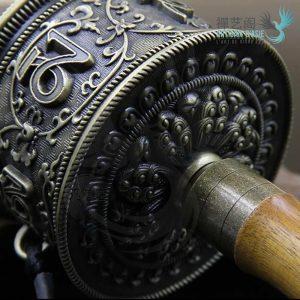
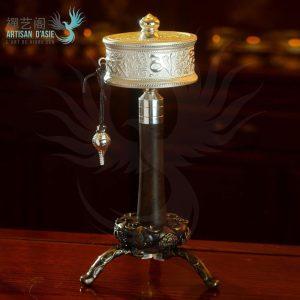
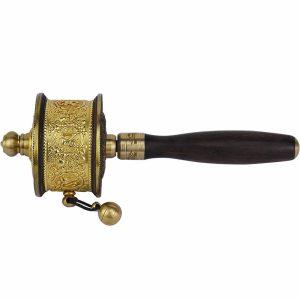
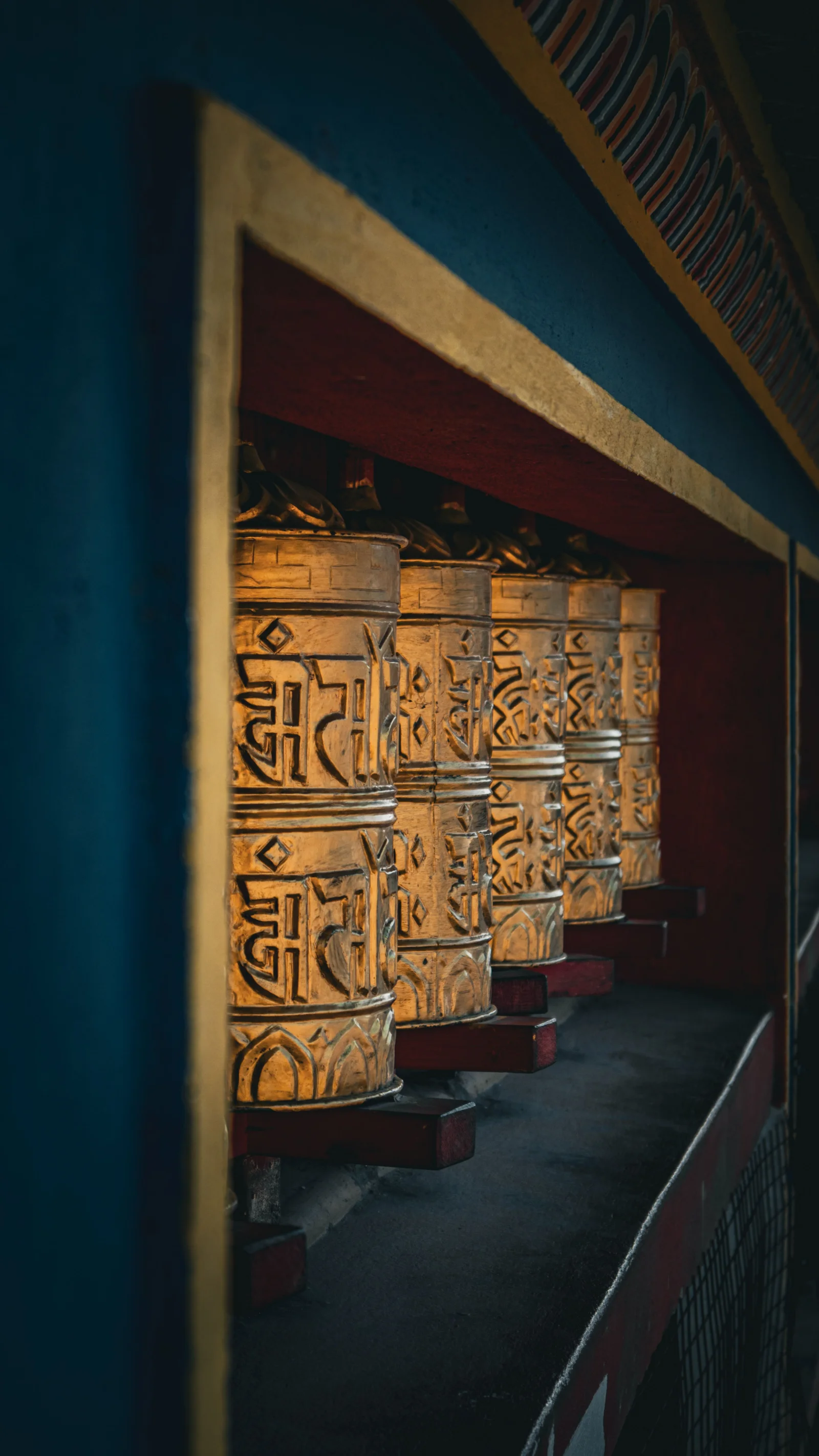
The cylinder opens. Inside, a rolled scroll inscribed with the mantra Om Mani Padme Hum. This is not a decorative detail: in Tibetan tradition, a prayer wheel contains mantras or sacred texts so that each rotation diffuses their energy. The turning cylinder replaces vocal recitation. This is why monks hold handheld prayer wheels for hours while walking or meditating.
In this pendant, the scroll is placed at the time of manufacture by the Tibetan craftsman in Lhasa. It is possible to add your own intention — a phrase, a name, a personal formulation — by opening the cylinder, slipping a small rolled piece of paper alongside the original scroll, and closing it again.
Om Mani Padme Hum: the six syllables
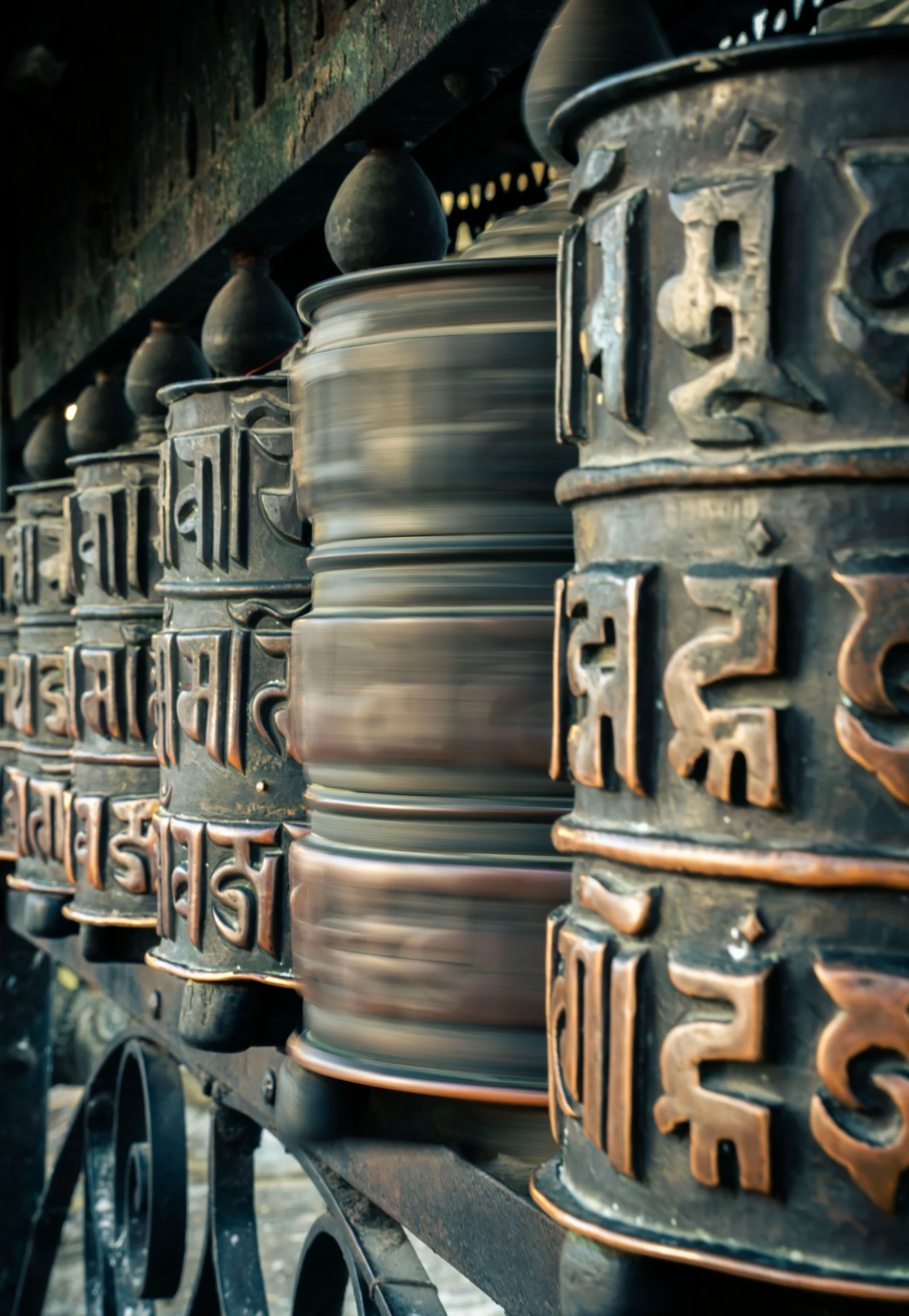
Om Mani Padme Hum is the mantra of Avalokiteshvara, the Bodhisattva of compassion and the protector of Tibet in Tibetan tradition. The six syllables correspond to the six realms of existence in Buddhist cosmology. Each is associated with the purification of one of the six emotions that are sources of suffering: pride, jealousy, desire, ignorance, greed, aversion.
It is not a wish. It is not a prayer addressed to an external entity. It is a symbolic formulation that, through repetition, modifies the relationship of the one reciting it to their own mental states. This is why it is carved on stones along paths, printed on prayer flags hung at mountain passes, inscribed on prayer wheels in temples. Repetition — physical, sonic, visual — is the active principle.
The gesture: turning clockwise
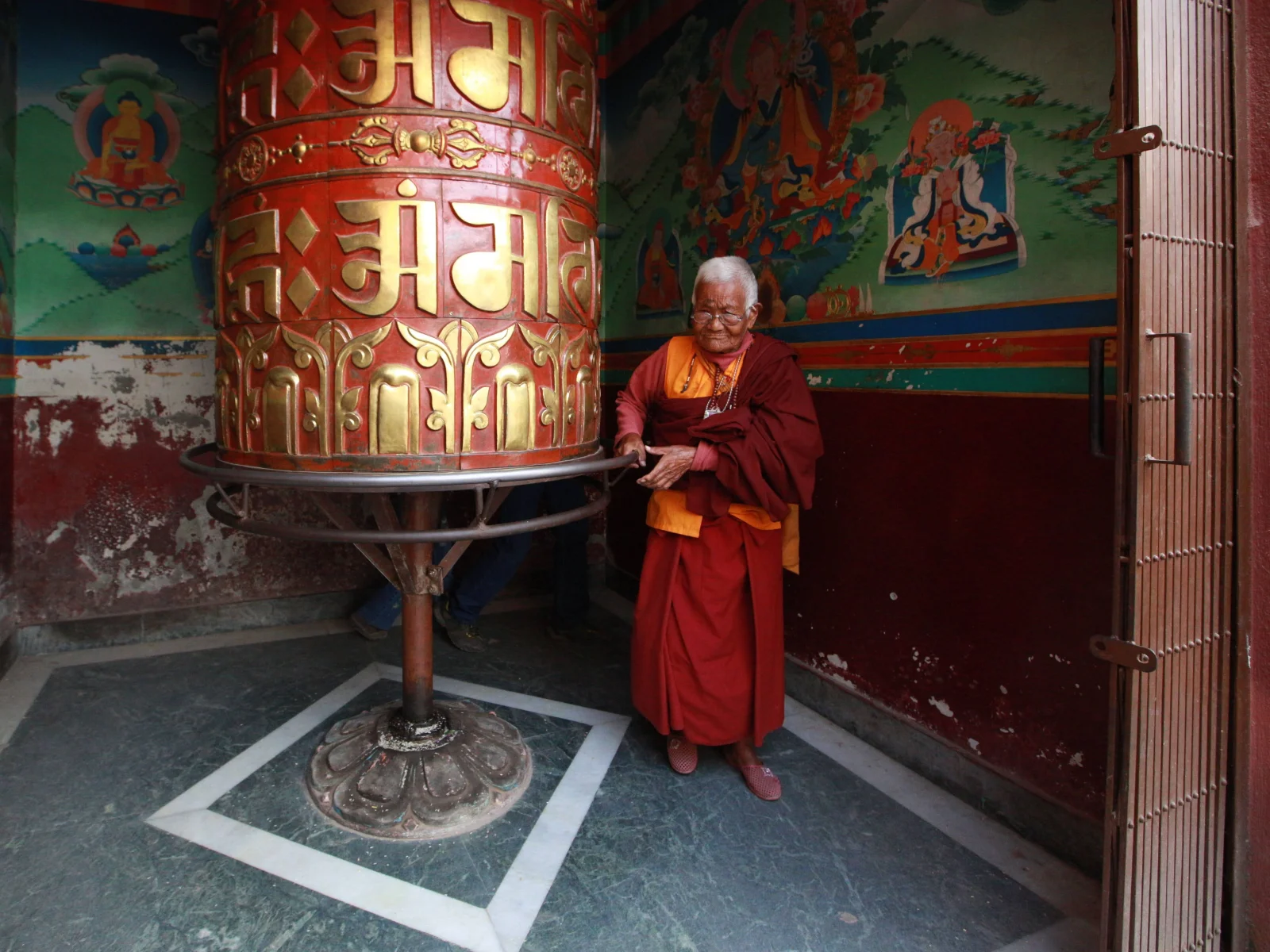
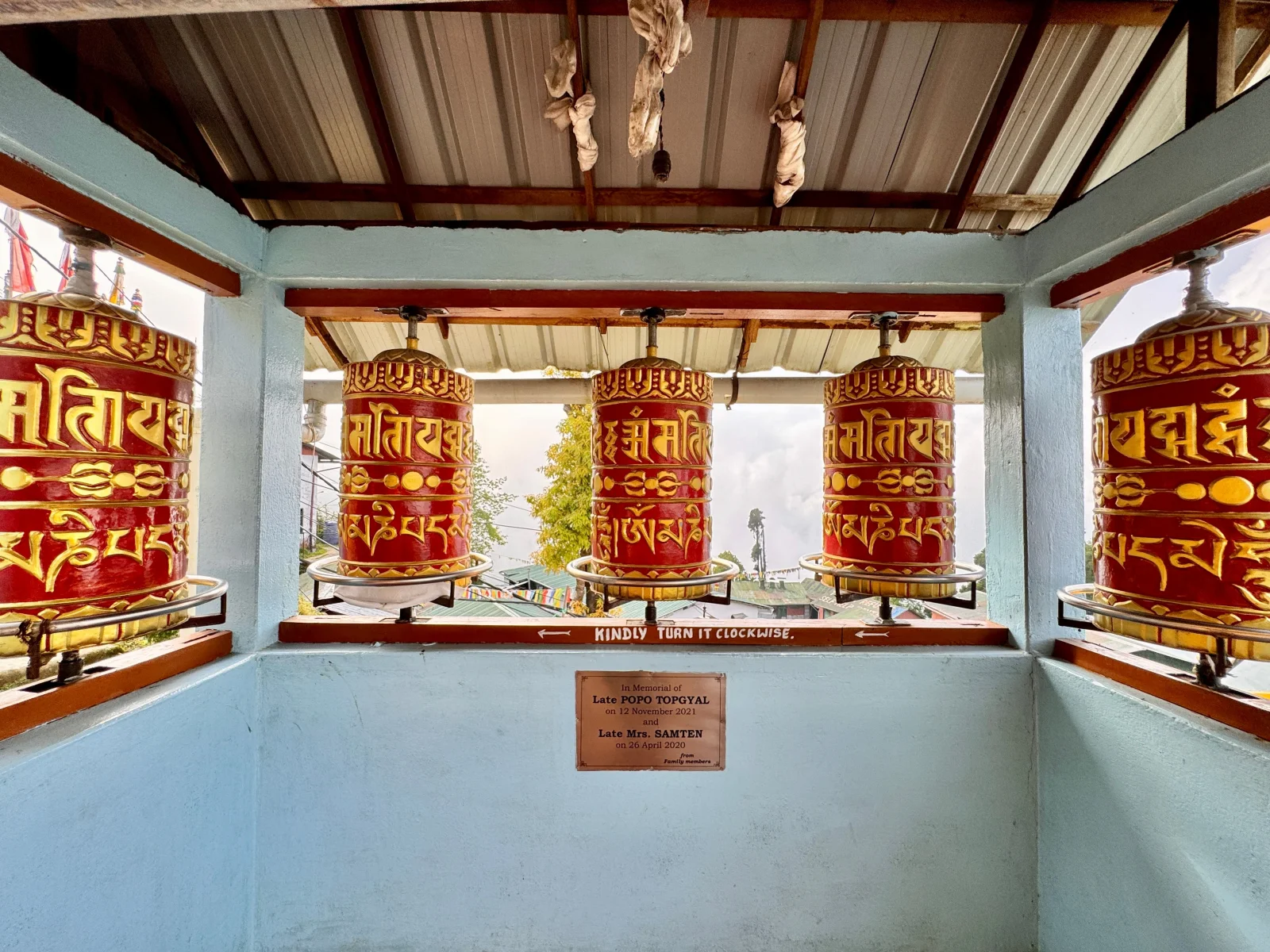
The cylinder is turned clockwise. This direction corresponds, in Tibetan tradition, to the movement of the sun and to circumambulation around stupas and sacred temples. Turning counterclockwise is a practice of the Bön tradition, which predates Buddhism in Tibet — different, not incorrect.
The daily use is simple. A few seconds of deliberate rotation before beginning something: a meeting, a commute, a task. A few seconds to mark the end. Not as a prescribed ritual. As a physical, deliberate reminder that the transition between two states exists and can be marked.

Made in Lhasa, Tibet
The pendant is hand-forged by a Tibetan Tibetan craftsman in Lhasa, in solid S925 silver. S925 designates the alloy at 92.5% pure silver — the international standard for sterling silver. The lotus flower engraved on the cylinder is a recurring symbol in Buddhist tradition: the plant that grows in mud and opens at the surface, unmarked by what it grew in.
S925 silver develops a slight patina through skin contact and time. The patina is not a flaw: it is the trace of use. Occasional care with a soft cloth is sufficient if the matte silver appearance is preferred.
Practical use
- Wear the pendant on the included 45cm chain, against the skin
- Hold the cylinder between thumb and index finger, turn clockwise
- No minimum duration: use is a question of regularity, not length
- To add a personal intention: open the cylinder, slip a small rolled paper alongside the scroll, close

The pendant
OM Mantra Prayer Wheel Pendant — Solid Silver S925 with Lotus Flower
Forged in Lhasa by a Tibetan artisan · Om Mani Padme Hum scroll included · 45cm chain
€79.00
In the same tradition
Other handmade objects from the Tibetan and Buddhist tradition:
- Three Tiger’s Eye Mala in Natural Stones — €89.00
- Tibetan Om Mantra Ring in Solid Silver S925 — €104.90
- Red Sandalwood Mala Necklace — €35.88
Cet article est aussi disponible en français : Moulin à prière en pendentif : Om Mani Padme Hum et le geste d activation
Version française : Lire en français