Wabi-Sabi: The Japanese Aesthetic of Imperfection and Transience
Wabi-sabi is a Japanese aesthetic concept rooted in the acceptance of transience and imperfection. It emerged from the Zen Buddhist and tea ceremony traditions of the Muromachi period (1336–1573) and remains a distinct lens through which Japanese design, craft, and daily life are understood. The term combines wabi — a quality of simplicity and solitary stillness — with sabi — the beauty that accumulates through age, wear, and the passage of time.

The origins of wabi-sabi
The aesthetic formalized around the practice of chado, the way of tea, particularly through the influence of tea master Sen no Rikyu (1522–1591). Rikyu moved the tea ceremony away from the display of Chinese porcelain and lacquerware — precious, symmetrical, finished — toward objects that were rough, irregular, local, and hand-formed. A cracked clay bowl repaired with gold lacquer held more interest than a perfect one.
The philosophical basis comes from Buddhist ideas about impermanence (mujo) and the non-self (muga). Nothing stays the same. Every object accumulates time. Wabi-sabi proposes that this accumulation is where beauty lives, not in the perfect initial state of a thing.
Wabi-sabi and the crafted object
In material terms, wabi-sabi identifies with objects that show their making: the fingerprint in the clay, the variation in hand-hammered metal, the grain visible in carved wood. Mass-produced objects, by contrast, eliminate these traces. The asymmetry of a hand-thrown bowl and the slight color variation in hand-hammered copper are not flaws — they are the record of a human hand at work.
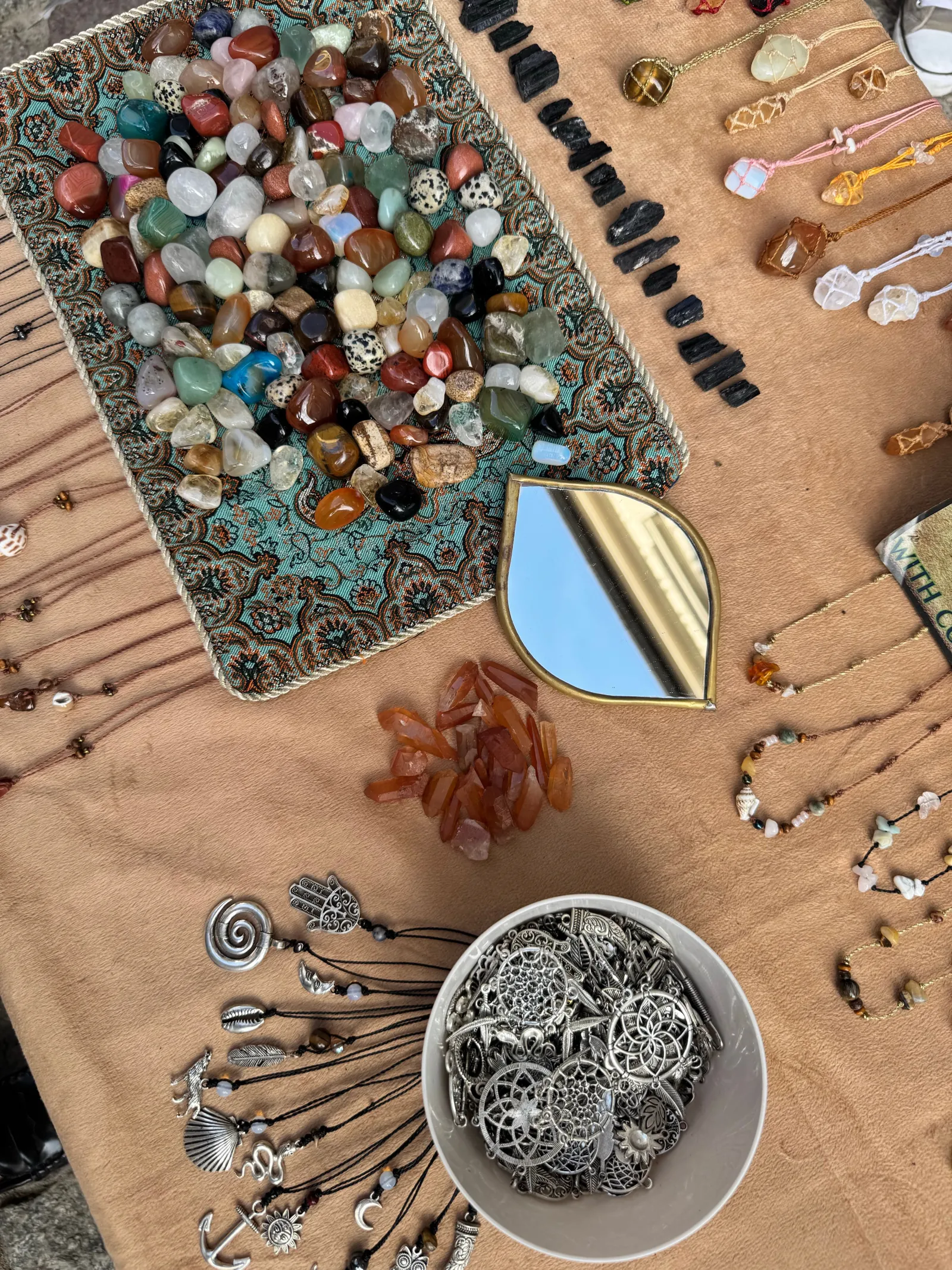
Natural materials — stone, unfinished wood, undyed linen, raw copper — age in ways that improve rather than degrade their appearance. A polished stone becomes more itself over time. A wooden surface develops a patina. These are wabi-sabi processes: the object becomes more fully what it is through use and time.
Kintsugi: the repaired crack
Kintsugi (金継ぎ, “golden joinery”) is the Japanese practice of repairing broken ceramics with lacquer mixed with gold, silver, or platinum. Rather than concealing the break, kintsugi highlights it. The repaired lines become part of the object’s history, visible and valued rather than hidden.
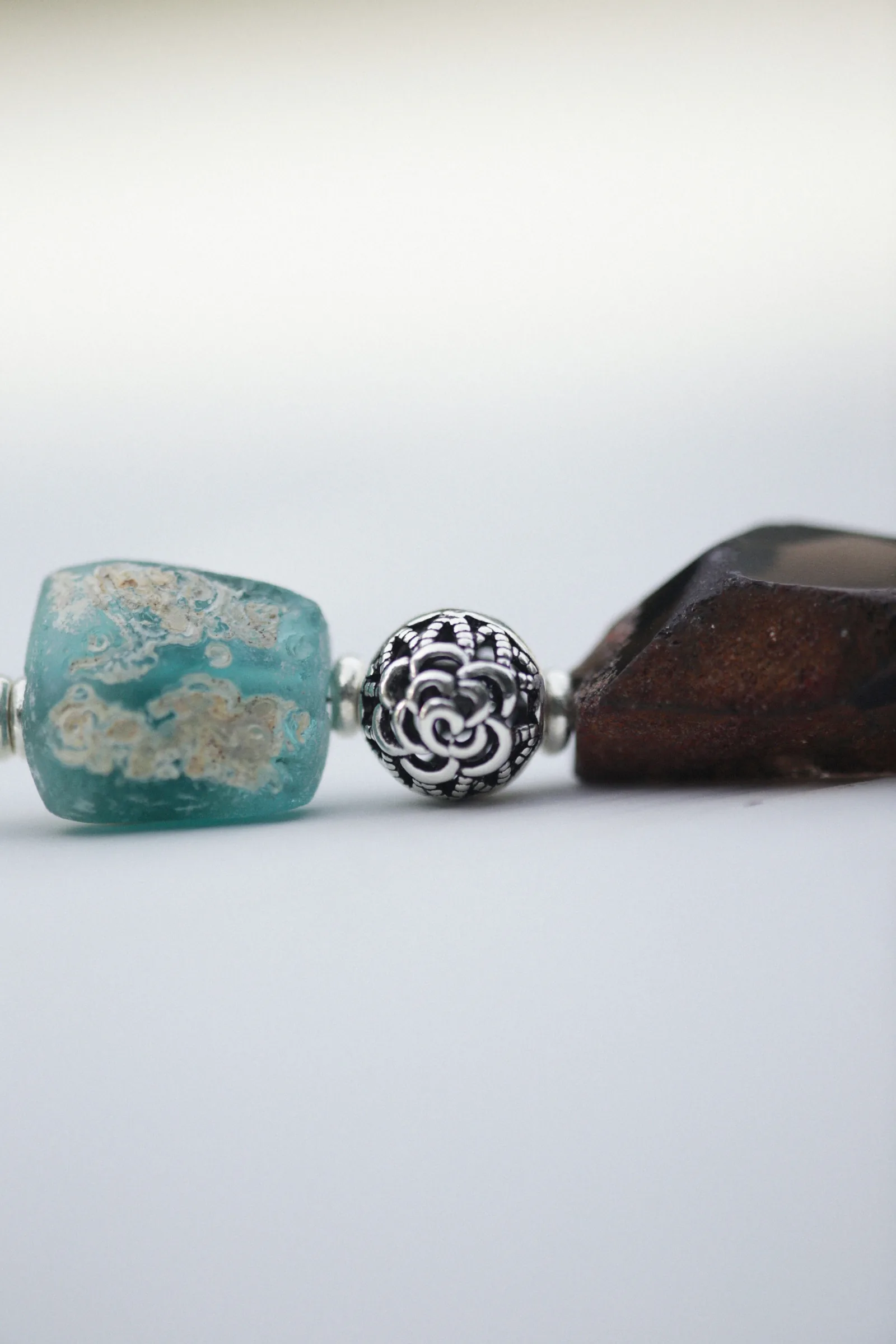
The kintsugi principle applies beyond ceramics. It is the same logic that leads a craftsperson to leave the tool marks on a bronze casting, or a woodworker to let the grain of a knot run through the final surface. The mark of process is not a defect to eliminate but a quality to preserve.
Wabi-sabi in interior space
Applied to a living space, wabi-sabi resists the accumulation of objects and the pursuit of matching sets. It favors a single well-used object over a coordinated arrangement. It prefers natural light over artificial uniformity, aged wood over lacquered surfaces, linen over synthetic fabric.
The practical expression is restraint. A wabi-sabi room contains fewer things than a conventional approach would suggest, and each object has been chosen for its material quality, its history, or its use — not for its decorative role in a scheme. Negative space — the empty shelf, the bare wall — is not absence but part of the composition.
Wabi-sabi and daily practice
Sen no Rikyu’s tea ceremony was a ritual of full attention applied to an ordinary sequence of actions: heating water, preparing tea, drinking from a bowl. Wabi-sabi in daily life draws on the same principle: the quality of attention brought to a simple action changes the nature of that action.
This connects wabi-sabi to meditation traditions in which the ordinary — walking, eating, breathing — becomes the object of complete attention. The bowl you hold, the incense you light, the object on the shelf you pass each morning: these are not background details but the specific texture of a life.
Wabi-sabi and handcrafted Asian objects
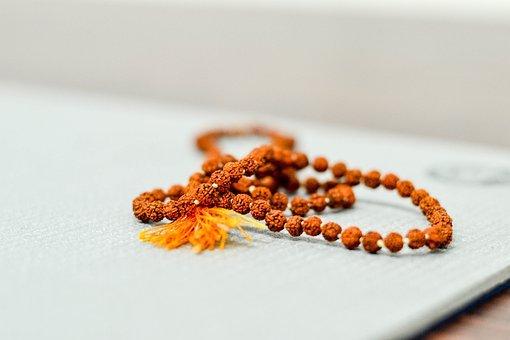
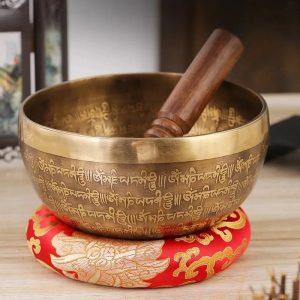
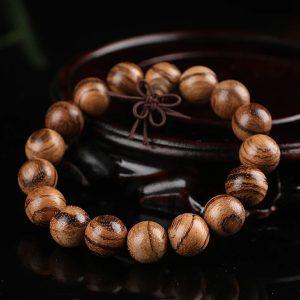
Many of the objects in traditional Buddhist and Asian ritual practice express wabi-sabi qualities without invoking the term. A hand-hammered Tibetan singing bowl carries variation in its wall thickness that a machine-cast bowl does not. A mala strung from natural stone has color shifts between beads that a synthetic strand cannot replicate. A carved wood Buddha holds the marks of the tool that shaped it.
These qualities — variation, the trace of making, natural material that ages — are what distinguish handcrafted objects from manufactured ones. They are also what makes them companions for a long time rather than disposable decoration.
In our shop
-

-
Copper Buddhist Singing Bowl with Inscriptions
Price range: €199.38 through €429.38Secure Yours This product has multiple variants. The options may be chosen on the product page -
-
Sale!
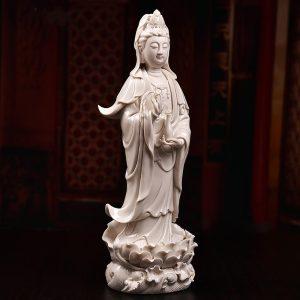
Ceramic Guanyin Bodhisattva Statue
Original price was: €187.90.€177.48Current price is: €177.48.
Version française : Wabi sabi : l’art japonais de la perfection et de l’imperfection