Agate Stone: Properties, Varieties, and Use in Tibetan Mala Bracelets
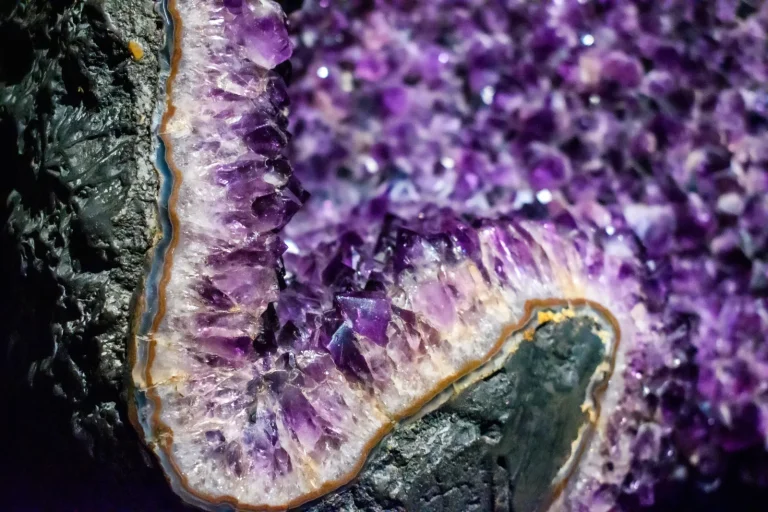
Agate is a variety of chalcedony — a microcrystalline form of quartz — identified by its characteristic concentric banding. The banding forms when silica-rich solutions progressively fill cavities in volcanic or sedimentary rock over millions of years. Each layer represents a distinct mineralization episode: a shift in temperature, a change in the chemical composition of surrounding fluids, or a pause in the process. The polished surface of an agate reveals the alternation of layers with varying densities and translucencies, unique to each specimen.
A stone shaped by successive layers
Agate forms through successive silica deposits inside cavities in volcanic rock. Each band corresponds to a distinct mineralization episode: changes in temperature, shifts in the chemical composition of circulating fluids, or interruptions in the process. Individual bands range from less than a millimeter to several centimeters in thickness. This diagenetic process — the transformation of sediments and minerals through geological time — can extend over several million years before a cavity is fully filled.
Agate deposits exist on every continent. The main deposits exploited for bead and jewelry production are concentrated in Brazil, Uruguay, India, Germany (Idar-Oberstein, the historic center of European agate cutting), and Madagascar. Coloration varies with the local chemical composition and the minerals dissolved in the forming fluids.
Physical properties
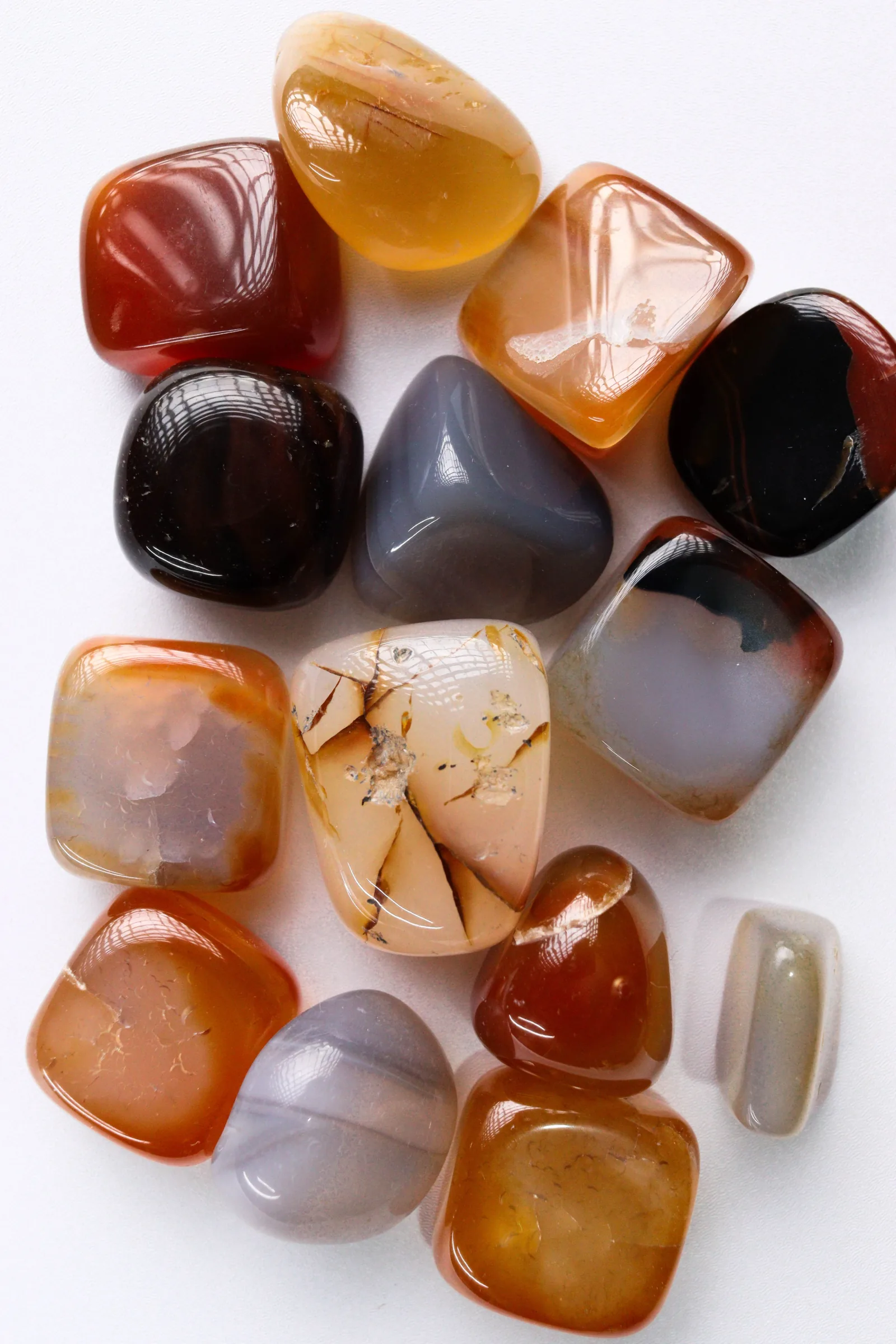
Agate has a hardness of 6.5 to 7 on the Mohs scale, which makes it resistant to everyday wear. Its microcrystalline structure gives it a density and homogeneity that allow it to be shaped into regular beads without fracturing during drilling. Translucency varies with mineral impurity content: iron oxide produces orange and red tones, manganese contributes purple shades, and chlorite creates green hues.
Agate’s hardness distinguishes it from other semi-precious stones used in lapidary work: it resists daily scratching better than calcite (3 Mohs) or fluorite (4 Mohs), and approaches the hardness of clear quartz (7 Mohs), which is its geological relative. This property explains its durability in malas worn daily.
Agate in Tibetan and Buddhist traditions
Agate has been used in Tibetan malas for centuries. In Himalayan traditions, naturally banded stones are associated with stability and continuity — qualities sought in objects used in daily practice. Tibetan craftspeople select agate for its regularity of form, resistance to heat and moisture, and capacity to be drilled without fracturing.
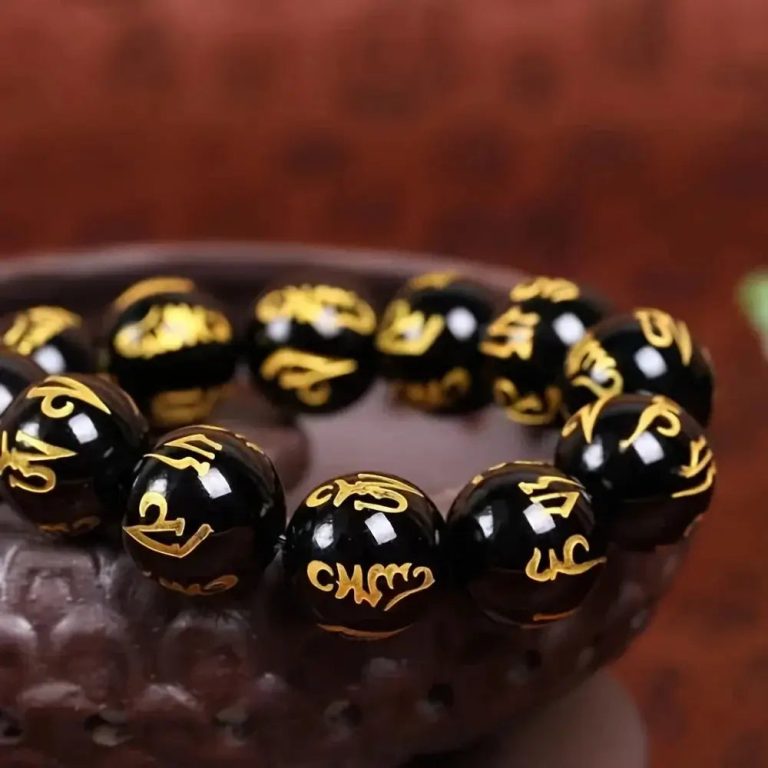
In Tibetan Buddhism, agate malas are used for mantra recitation, particularly the mantra Om Mani Padme Hum. The smooth texture of polished beads facilitates the progressive movement of fingers from bead to bead during recitation. The 21 beads of a mala bracelet correspond to one complete recitation cycle before returning to the start.
Main varieties of agate
Several agate varieties are distinguished by their banding structure and coloration:
- Banded agate: regular parallel or concentric bands, the most common form in jewelry collections
- Fire agate: iridescent inclusions caused by layers of goethite between silica bands, primarily found in Mexican deposits
- Moss agate: plant or mineral inclusions suspended in a translucent matrix, without visible banding
- Blue Lace agate: fine alternating blue and white bands, with primary deposits in Namibia
- Eye agate: circular concentric formation resembling the structure of an eye, produced by a transverse cross-section of the nodule
Choosing an agate for a mala bracelet
For a mala bracelet, agate beads should have consistent sizing and regular drilling. The banding visible on each bead varies depending on which section of the original nodule was used: a transverse section produces concentric rings, a longitudinal section produces parallel bands. Beads from the same nodule share a color consistency that beads from different sources cannot replicate.
The color of natural agate should not be perfectly uniform from bead to bead on a single bracelet: a perfectly homogeneous color may indicate dyeing treatment. Agate is one of the most commonly dyed stones on the market, particularly to produce blue, pink, or black shades at saturation levels that do not occur naturally.
Agate in mala bracelets
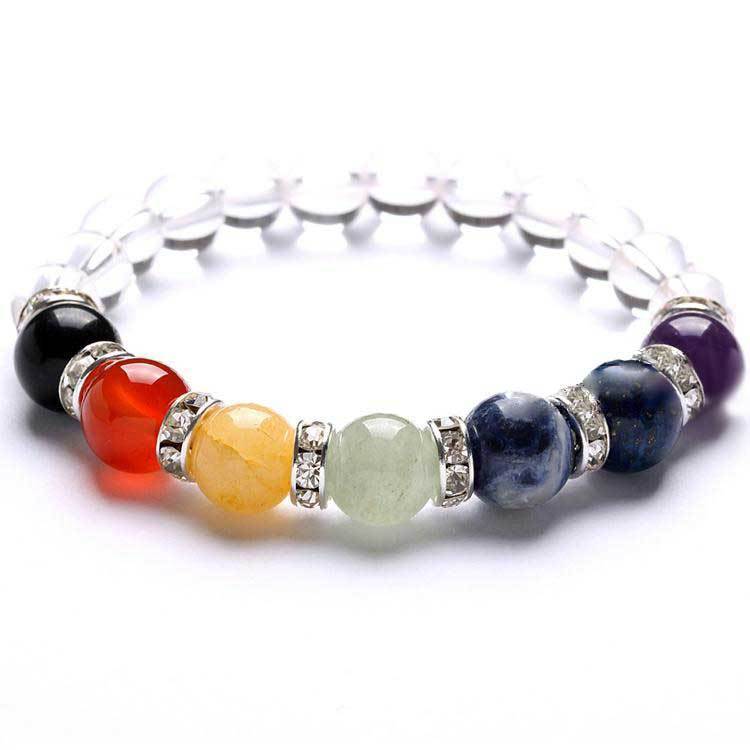
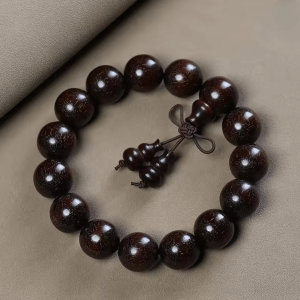
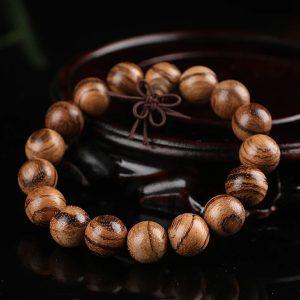
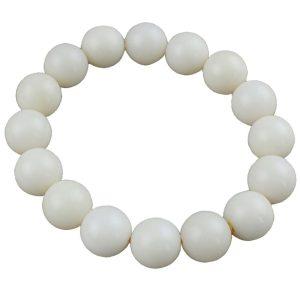
Agate mala bracelets are strung on durable elastic cord with beads selected for surface regularity and bore consistency. Each bracelet uses 21 beads — the standard count of the Tibetan mala bracelet format, which allows mantra recitation in sets of 21 repetitions, equivalent to one twenty-first of a full 108-bead mala. Bead dimensions — typically 8 mm or 10 mm — are suited to daily hand use.
In our shop

Version française : Pierre d’agate : propriétés, variétés et usage dans les malas tibétains