Amethyst: Properties, Meaning, and Use in Meditation Practice
Amethyst is a variety of quartz whose violet color results from iron ions in the crystal lattice modified by natural irradiation during the rock’s formation. The shade ranges from pale lavender to deep purple, depending on iron concentration and irradiation intensity. The most significant deposits are found in Brazil, Uruguay, Zambia, Ethiopia, and Russia.
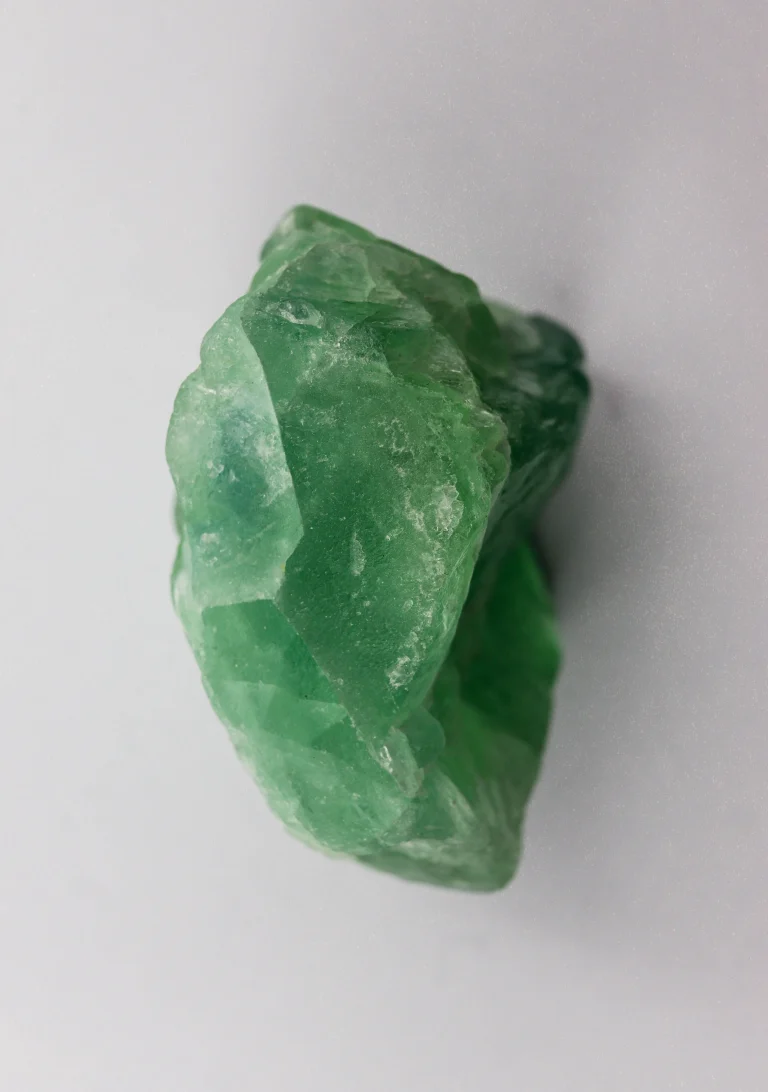
A violet quartz formation
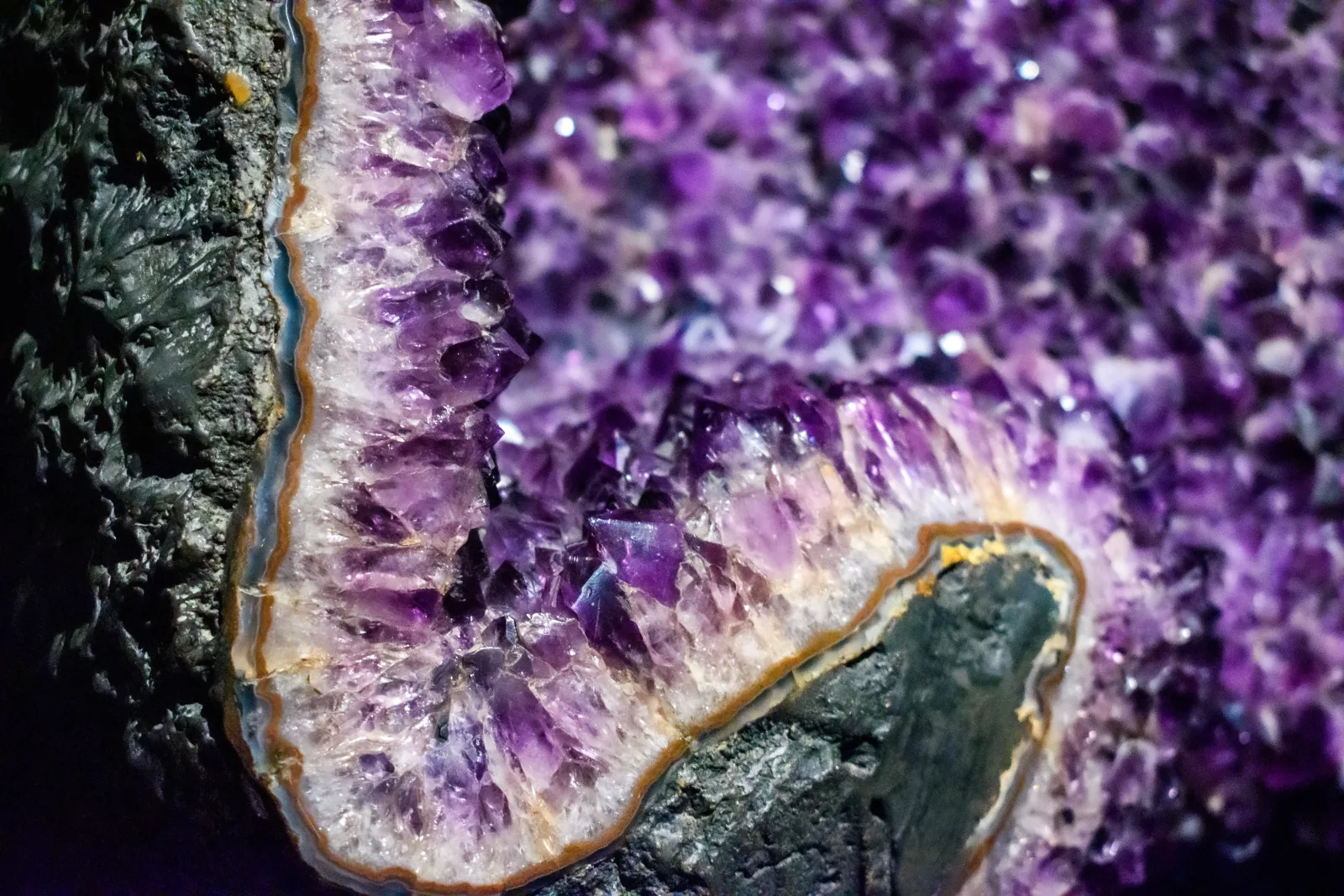
Amethyst forms in geodes or veins within volcanic rock. Geodes — spherical cavities lined with inward-pointing crystals — are characteristic of amethyst formation in South American basalt flows. Quartz grows slowly on siliceous walls under the action of hydrothermal fluids. The violet color is not intrinsic to the mineral: colorless quartz crystals can transform into amethyst through natural irradiation during geological formation.
Color saturation depends on two factors: the quantity of iron substituted in the crystal lattice (typically 0.001 to 0.01% by weight) and the dose of natural irradiation absorbed. Crystals from the same deposit can therefore show very different saturations depending on their position within the geode.
Crystal structure and geodes
Amethyst geodes range from a few centimeters to several meters. The interior reveals a concentric arrangement: an outer layer of white or grey chalcedony, an intermediate layer of amorphous quartz, and an inner layer of terminated crystals oriented toward the center of the cavity. Crystal size and quality depend on the cooling rate of the forming fluids and their chemical composition.
Brazilian geodes — particularly from the state of Rio Grande do Sul — produce large, well-formed crystals with clean terminations. Uruguayan geodes yield finer crystals, often with more saturated color. African amethysts (Zambia, Ethiopia) frequently show bicolor zoning visible under magnification: violet at the tip, colorless at the base.
Amethyst in Buddhist and Tibetan traditions
In Himalayan traditions, violet quartz is associated with the crown chakra (sahasrara), the energy center at the top of the skull, connected with expanded states of consciousness. This association is not specific to amethyst: it is shared by several violet quartz varieties and translucent stones. Tibetan malas include amethyst beads in compositions designed to accompany practices of concentration and mantra recitation.
In classical Tibetan Buddhism, mala materials are selected according to the specific practice. Texts prescribe particular materials for certain mantras — bone, nacre, sandalwood, rock crystal — but malas using semi-precious stones, including amethyst, are in common use in contemporary practice.
Use in meditation
Amethyst is used in several forms in meditative practice:
- As beads in a mala: 21 or 108 beads provide a tactile support for counting mantra repetitions
- As a placed object: a geode or crystal positioned in the practice space
- As a pendant: worn in direct contact with the body during or outside formal practice
The smooth texture of polished beads and the consistent weight of each bead facilitate manual counting during recitation. Standard bead diameter for amethyst malas is 8 mm or 10 mm, suited to handheld use during seated recitation.
Choosing amethyst: quality indicators
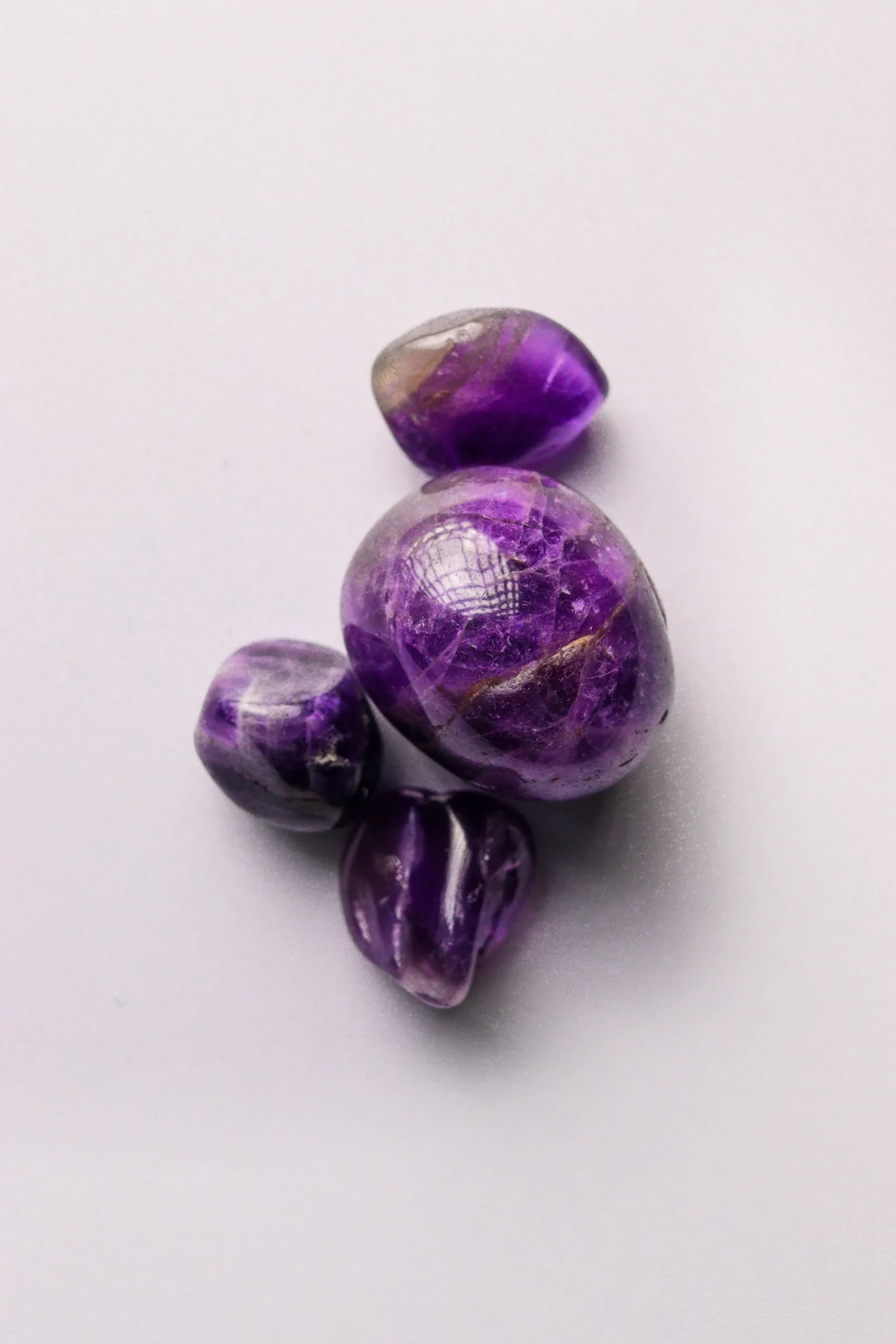
Color saturation is the primary evaluation criterion. Deeply violet tones are more stable under light exposure than pale lavender tones, which can fade over years of sunlight. This color loss is caused by the photochemical reduction of the iron ions responsible for the color: it is irreversible under normal conditions.
Internal clarity — the absence of inclusions visible to the naked eye — indicates formation in a chemically stable environment. The most common inclusions in amethyst are fine rutile veils, healed fractures, and iridescence zones (rainbows) caused by internal fracture planes.
Amethyst heated above 470 degrees C undergoes an irreversible color change, transforming into citrine (yellow or orange quartz). This transformation is used commercially to produce citrine — most citrine on the market is heated amethyst. Amethyst malas should be kept away from prolonged direct sunlight to preserve color saturation.
Amethyst in mala bracelets
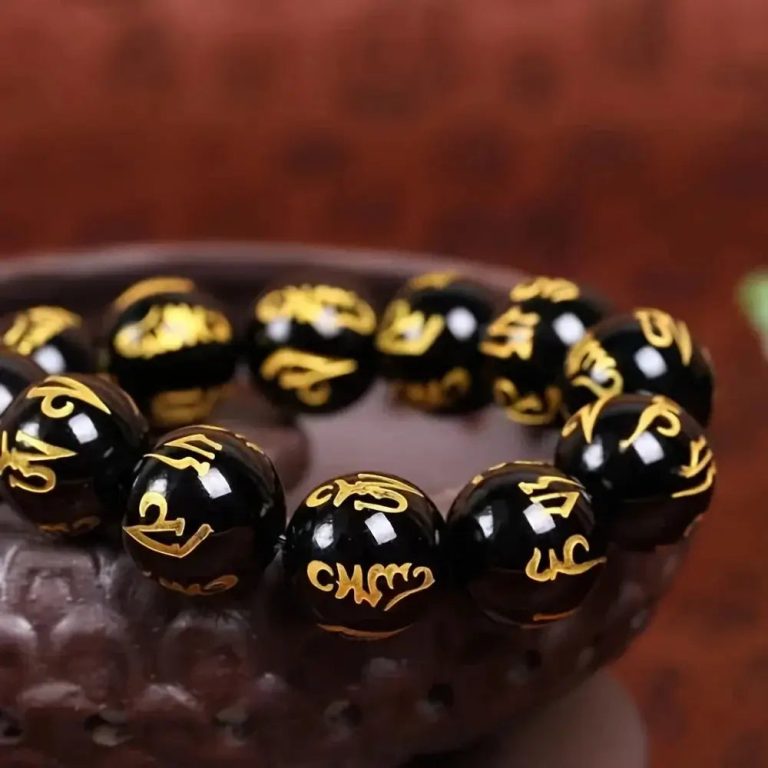
Amethyst mala bracelets are strung on durable elastic cord with round beads cut from natural violet quartz. Selection focuses on color shade consistency within each bracelet and bead diameter regularity. The beads are polished without heat treatment. Elastic cord in silicone or durable synthetic fibers withstands several years of daily use without loss of tension.
In our shop

Version française : Améthyste : le quartz violet, ses propriétés et son usage en méditation