Rose Gold Tibetan Prayer Wheel
€22.68
⭐ 4.8/5 – 5 verified reviews
Combining the grounding warmth of wood with the conductive energy of copper, this traditional Tibetan prayer wheel is a vital tool for Buddhist practice. As the wheel spins on its axis, it activates the power of the mantras contained within, radiating compassion and merit. Each piece is…
EU orders: flat €3 customs duty (EU reform July 2026). Paid directly to the EU — no markup by Artisan d'Asie. Waived on orders ≥ €150.
Free shipping on orders over €80!
- Satisfaction Guaranteed
- No Hassle Refunds
- Secure Payments
Description
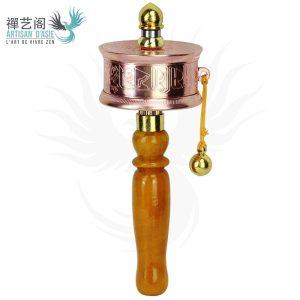
Rose gold Tibetan prayer wheel, copper-bodied and wood-handled, settles into the palm with the ease of long practice. The warm metallic surface catches light as it turns in the hand. This is an object made for daily contact, not storage.
The Tibetan prayer wheel, or mani wheel, is among the oldest instruments of Vajrayana practice, with origins tracing to 4th-century India before its adoption across Tibet and Nepal. The form is governed by intention: a cylindrical copper drum inscribed with Om Mani Padme Hum rotates on a central spindle. Spinning the wheel carries the same merit as reciting the mantra aloud. This piece follows traditional construction, with the drum finished in a rose gold tone that honors the lineage without departing from its form.
The drum is formed from copper sheet, shaped into a cylinder and engraved with Om Mani Padme Hum in Tibetan script. The rose gold finish is applied to the copper, giving the piece its warm tone. The handle is carved from hardwood, smooth and weight-balanced in the hand. A weighted chain at the base sustains rotation. The drum diameter is approximately 4 centimeters. The piece measures approximately 17 centimeters in length. The spindle is fixed; the drum rotates freely on its axis.
Rose gold Tibetan prayer wheel. Copper drum with rose gold surface finish, carved hardwood handle, weighted pendulum chain. Approximately 17 cm length, 4 cm drum diameter. Om Mani Padme Hum inscription in Tibetan script. Vajrayana mani wheel tradition. Sold individually. Ships from France.
A daily companion for hand and attention. Built to the proportions of traditional practice. Made to be used, not kept.
Additional information
| Title | Default Title |
|---|