Moonstone Meaning, History, and Healing Properties
Moonstone is a feldspar gemstone prized for the way it seems to hold light beneath its surface, a soft, silvery glow that shifts as the stone turns. In crystal healing traditions it is valued both for this visual beauty and for a long list of properties tied to intuition, fertility, and emotional balance.
If you are curious about moonstone meaning, its mineralogical origins, and how people have used the stone throughout history, this guide covers what you need to know.
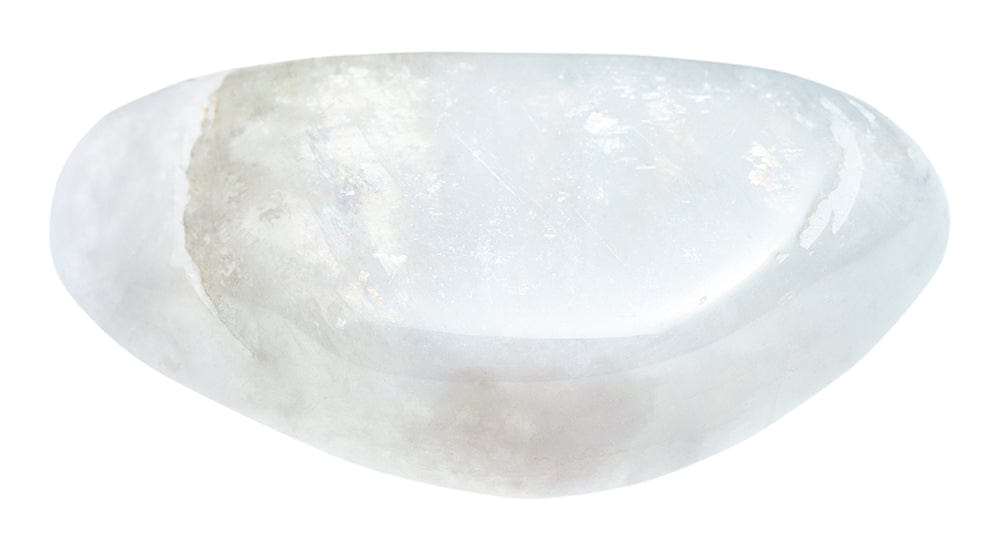
Moonstone is a semi-precious stone known for reflecting light in a way that recalls moonlight itself. It is closely associated with dreams and the subconscious, recognizable by the silvery sheen that catches the eye immediately.
Its properties are most often linked to women’s health, particularly fertility and menstrual balance, and it is also used to ease anxiety and support creativity.
Origin and History
In Earlier Times
Looking back through history explains why moonstone has fascinated people for so long, its resemblance to the clarity of the moon has always drawn attention.
Moonstone was formally described by Jean-Claude Delamétherie in 1801.
In antiquity, the stone was already considered an object of divination and was tied to goddess imagery. Some believed that holding a piece of moonstone in the mouth granted a vision of one’s romantic future.
Indian and Roman civilizations both believed the stone was a natural creation of moonlight itself, owing to its color and shimmer. Moonstone remains a sacred stone in India today.
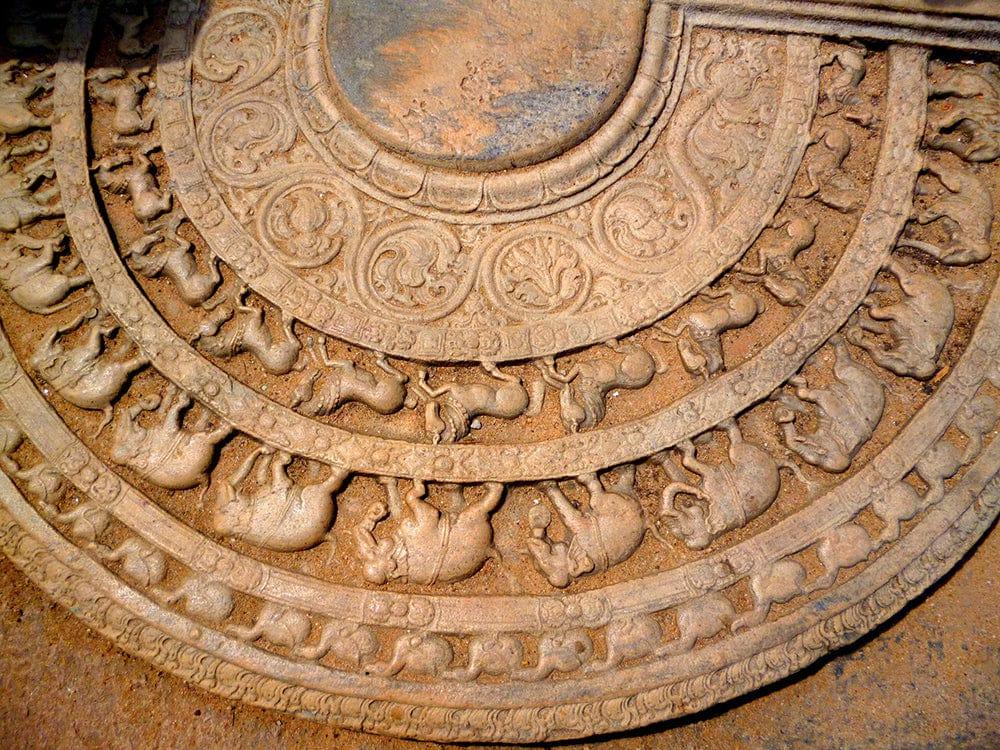
Despite what is sometimes claimed online, the moonstone thresholds found at the entrance of Buddhist temples in Sri Lanka have no relation to the gemstone discussed here. Those semicircular carvings symbolize the path to knowledge and nirvana.
During the Art Nouveau period, moonstone became a popular material for decorative objects. René Lalique drew on nature for his jewelry designs of the era, and the Lalique house still produces jewelry using this stone today.
In the 2000s, moonstone was officially declared the state gemstone of Florida, honoring the first moon landing in 1969.
Today
Still widely used, moonstone appears in many forms of jewelry: cabochons, bracelets, necklaces, pendants, as well as decorative objects.
What Does the Name Mean?
The name moonstone traces to two roots: the Sanskrit “kanta,” meaning “beloved,” and “chandra,” meaning “moon.” Together they form “beloved of the moon,” a direct reference to its resemblance to the moon and its mythic origins.
Mineralogical Properties of Moonstone
Moonstone is a mineral belonging to the silicate class, in the adularia family within the feldspar group.
Colorless at its base, it is recognized by the blue, white, or yellow sheen produced by its crystalline structure. This optical effect is called adularescence, the appearance of light gliding across the stone’s surface as the viewing angle changes.
Moonstone has a hardness of 6 to 6.5 on the Mohs scale and a density between 2.53 and 2.6.
Where Is Moonstone Found?
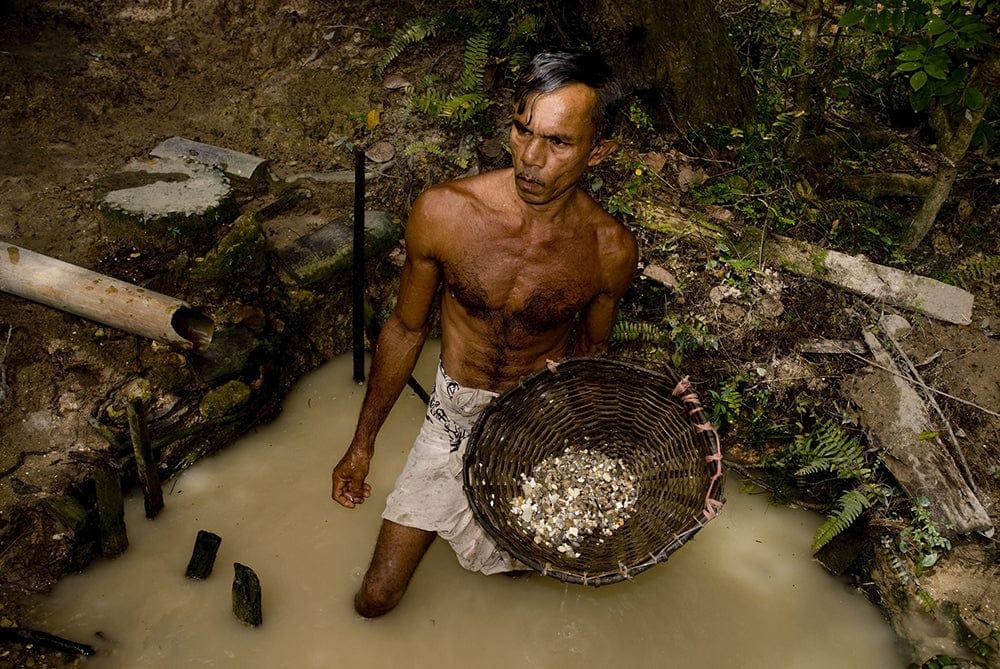
The most significant deposits are relatively isolated, found mainly in Sri Lanka and India. Moonstone is also found in Madagascar, Myanmar, Tanzania, the United States, Brazil, and Australia.
Properties and Uses in Crystal Healing
Worn on the body, this stone is said to offer benefits on both a physical and spiritual level. Here are its most commonly cited properties.
Physical
- Said to ease fertility issues, menstrual discomfort, and menopause symptoms.
- Believed to support lactation.
- Said to help reduce acne and skin issues by balancing the hormonal system.
- Associated with thyroid regulation.
- Said to help regulate toxins.
- Believed to reduce water retention.
- Said to soothe insect bite irritation.
- Associated with easing stress-related digestive issues.
- Said to support sexual wellbeing and marital happiness.
- Believed to help with sleepwalking.
Emotional and Spiritual
- Said to support decision-making.
- Believed to strengthen romantic bonds.
- Said to calm mood swings and hyperactivity.
- Associated with intuition, creativity, and imagination.
- Said to ease stress, calm fear and anxiety, and bring serenity.
- Believed to encourage open-mindedness and better relationships with others.
How to Care for Moonstone
To preserve its beauty and its properties, proper care matters.
Cleansing
Moonstone can be placed under demineralized water, spring water, or running water. It does not respond well to salt, so avoid salted water when cleansing it.
Recharging
Leave your stone in moonlight for several hours, ideally on a full moon night.
Going Further
Astrological Signs
In astrology, moonstone is associated primarily with Cancer, ruled by the moon, and also with Capricorn, Gemini, and Aquarius.
Moonstone and Its Associated Chakra
This mineral is linked to the Sacral Chakra (the second chakra), known as Svadhisthana in Sanskrit.
A Few More Notes
Tied to the number 13, moonstone is said to bring comfort to those uneasy about that number. It is also considered a fitting gift to mark a couple’s 13th wedding anniversary.
In Our Shop
- Moonstone Mala Bracelet Tree of Life
- Moonstone & Blue Tiger’s Eye Mala Bracelet
- White Moonstone Mala Bracelet
The moonstone we offer is set in sterling silver 925 in our most requested pendant from this range: Dragon Moonstone Pendant — Sterling Silver 925.