Duanwu Festival: The Fifth Day of the Fifth Month and the Ba Gua Amulet
Duanwu (端午节), the Dragon Boat Festival, falls on the fifth day of the fifth lunar month — June 19 in 2026. It is one of China’s three major traditional festivals, alongside the Spring Festival and the Mid-Autumn Festival. Its origin is associated with the poet-minister Qu Yuan (340-278 BCE), who drowned himself in the Miluo River to protest the corruption of the court of the Chu kingdom. Villagers are said to have thrown rice balls into the water to keep fish from his body, and made noise with their boats to frighten away evil spirits — two practices whose direct descendants are dragon boat racing and zongzi (sticky rice dumplings).
The fifth day of the fifth month: a period of imbalance
In Chinese cosmology, the fifth lunar month corresponds to a period of seasonal transition — a moment when yin and yang forces are out of balance. This imbalance is associated with the appearance of the “five poisons” (wudu, 五毒): the snake, scorpion, lizard, centipede, and venomous toad. These creatures are active in summer and are considered in tradition to carry illness and misfortune.
The fifth month also corresponds to yang energy at its peak — the summer solstice falls within this period — which paradoxically creates a risk of overheating the vital forces. The practices of Duanwu aim to rebalance these energies and protect household members through the warm months ahead.
Dragon boat racing
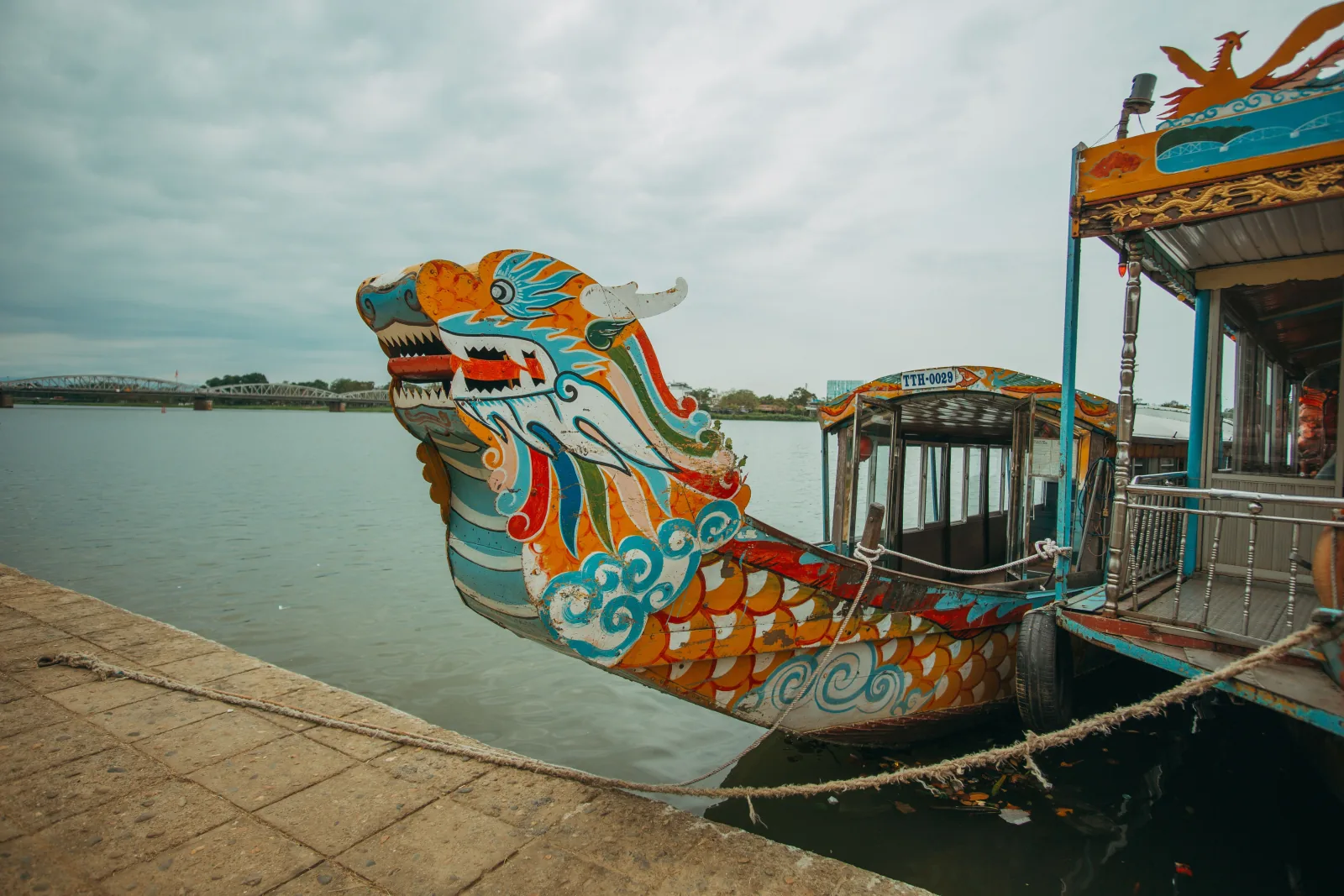
Dragon boat racing (龙舟竞渡) is the most visible expression of the festival. Vessels 15 to 20 meters long, decorated with a carved and painted dragon’s head at the bow and a tail at the stern, are propelled by 20 to 80 rowers synchronized by a drummer positioned at the front. The drum beat sets the paddle rhythm: a vessel can reach 20 strokes per minute at sprint pace.
Races run over distances of 250 to 2,000 meters. Tradition holds that the winning boat is the first to seize a banner planted at the finish line. The sport is now recognized internationally by the International Dragon Boat Federation, with championships in more than 60 countries.
The Ba Gua: the Taoist octagram
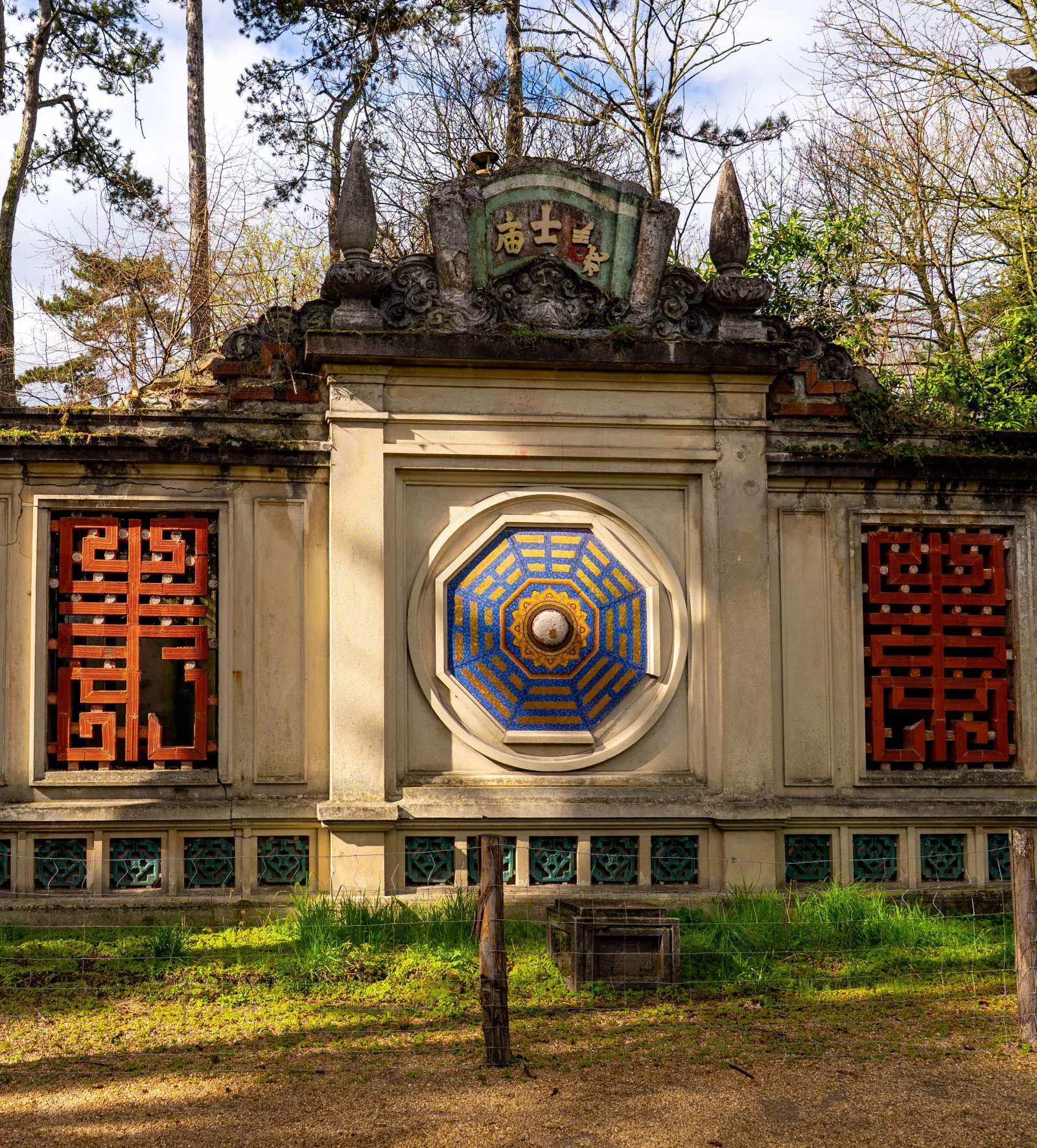
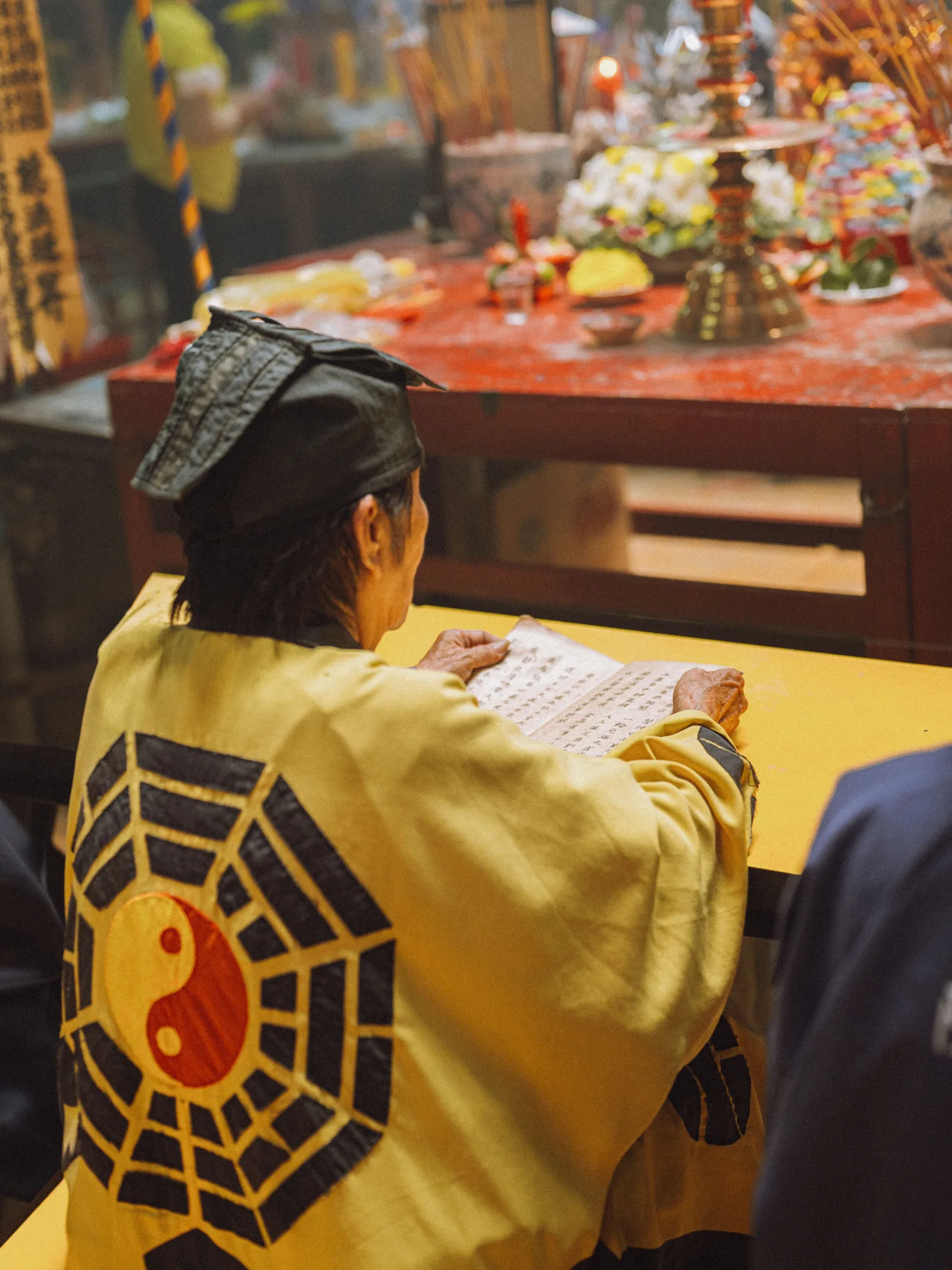
The Ba Gua (八卦) — literally “eight trigrams” — is one of the foundational symbols of Taoist cosmology. Derived from the Yijing (I Ching, the Book of Changes), it represents eight fundamental configurations of the universe: heaven (qian), earth (kun), fire (li), water (kan), lake (dui), mountain (gen), wind (xun), and thunder (zhen). Each trigram consists of three lines — solid (yang) or broken (yin) — which combine to form the 64 hexagrams of the Yijing.
The Ba Gua amulet during Duanwu
During Duanwu, the Ba Gua is one of the primary protective objects. It is hung at house entrances — often with the Taijitu (yin-yang symbol) at its center — to create a field of protection in all eight directions. Its octagonal configuration corresponds to the eight points of space and the eight fundamental forces: wearing a Ba Gua means placing oneself under the protection of all the cosmic forces simultaneously.
The arrangement of the trigrams varies by tradition. The earlier heaven Ba Gua (Xiantian, 先天八卦), attributed to Fu Xi, represents the universe before creation. The later heaven Ba Gua (Houtian, 后天八卦), attributed to King Wen, represents the world as it exists after creation. Both arrangements appear in protective amulets; Houtian is more common in pendants worn daily.
The five poisons and Duanwu protective objects
The protective practices of Duanwu form a coherent system directed against the five poisons:
- Mugwort and calamus: branches hung at house entrances for their aromatic and repellent properties. Mugwort (ai, 艾) has also been used in moxibustion since antiquity.
- Realgar wine (xionghuang jiu): drunk during the festival or used to trace protective characters on children’s foreheads. Realgar (arsenic sulfide) was considered an effective poison against the five harmful creatures.
- Fragrant sachets (xiangbao, 香包): small red cloth pouches containing aromatic herbs — clove, camphor, calamus — worn as olfactory amulets.
- Sterling silver Ba Gua: worn at the neck or hung at the household entrance, it provides symbolic protection in all eight directions.
Wearing a sterling silver Ba Gua today
The Ba Gua amulet tradition extends beyond the Duanwu period: it is worn continuously as a daily protective object. The sterling silver Ba Gua pendant (S925) reproduces the symbol engraved according to the Houtian arrangement — the most common for objects intended to be worn. S925 sterling silver, an alloy of 92.5% pure silver, is the standard used in fine jewelry. Its weight and resistance allow it to be worn daily without visible degradation over several years.
The pendant is worn in direct contact with the skin, following the tradition of jade amulets in Chinese practice. The patina that silver develops over time — slightly darkened in the recesses of the engraved motif, brighter on the raised surfaces — is characteristic of an object in real use, worn rather than displayed.
In our shop

Version française : Fête de Duanwu : le 5e jour du 5e mois et l’amulette Ba Gua