What Rajan Can Do With His Hands
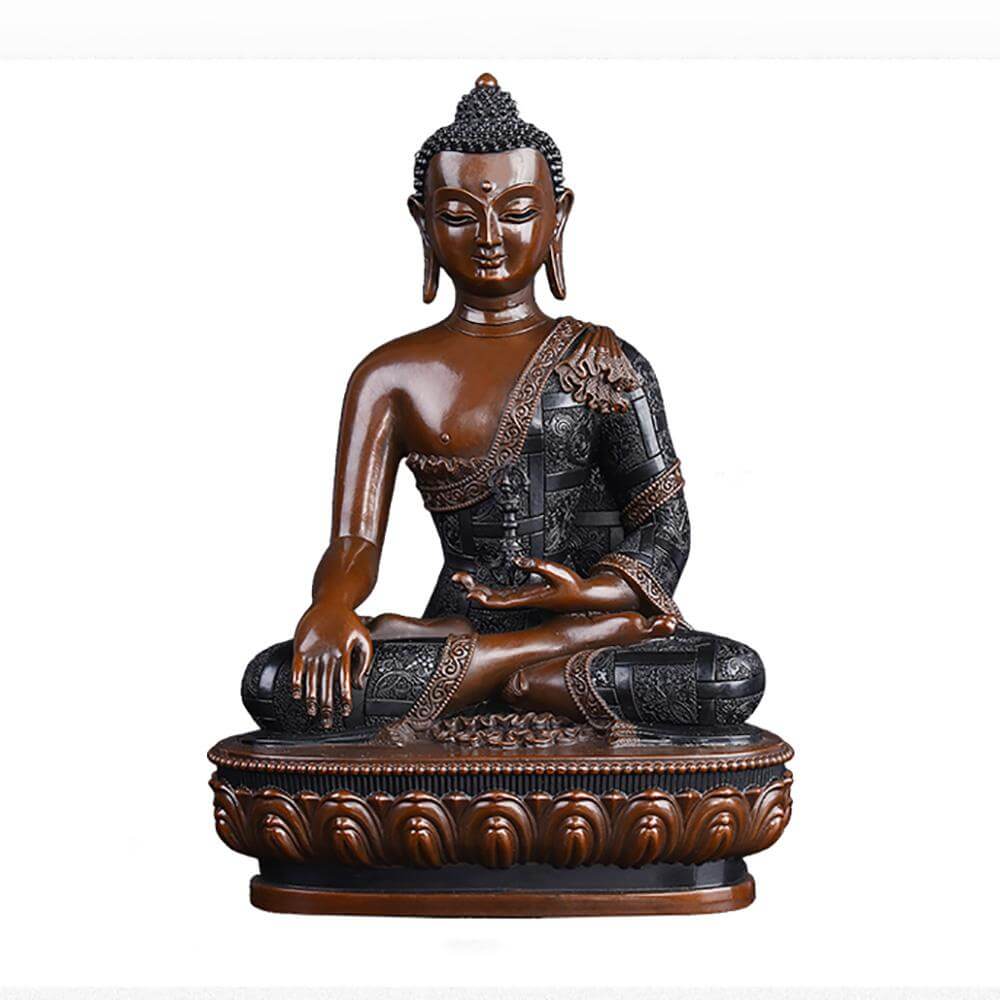
In a workshop in the Kathmandu valley, an artisan pours molten copper into a wax mold he carved himself, a few hours earlier, around a shape he knows by heart: Shakyamuni, seated, one hand touching the ground.
Call him Rajan. It’s not a name you’ll find on a plaque: he’s one of dozens of artisans working in this valley, where lost-wax copper casting has been passed down for over a thousand years. But the gesture he’s making is real, and that’s the one we’re telling you about.
Rajan learned this craft the way everyone before him did: by watching first, then failing, then starting again. Lost-wax casting doesn’t forgive shortcuts. You carve the form in wax, coat it in clay, heat it until the wax melts and escapes, hence the name, leaving an exact hollow mold behind. Then you pour the molten copper, and you wait. There’s no second chance: if the mold cracks, the piece is lost, hours of work with it.
Once the statue is out of the mold, still raw, Rajan takes it in hand. He burnishes it with cloth and heat to bring out that warm, aged-copper sheen. Then, with a small tool, he applies a cold patina into the recesses: the folds of the robe, the base of the throne, so the light stays trapped there and the form reads deeper than it actually is. It’s not an effect added afterward. It belongs to the same craft as the casting itself.
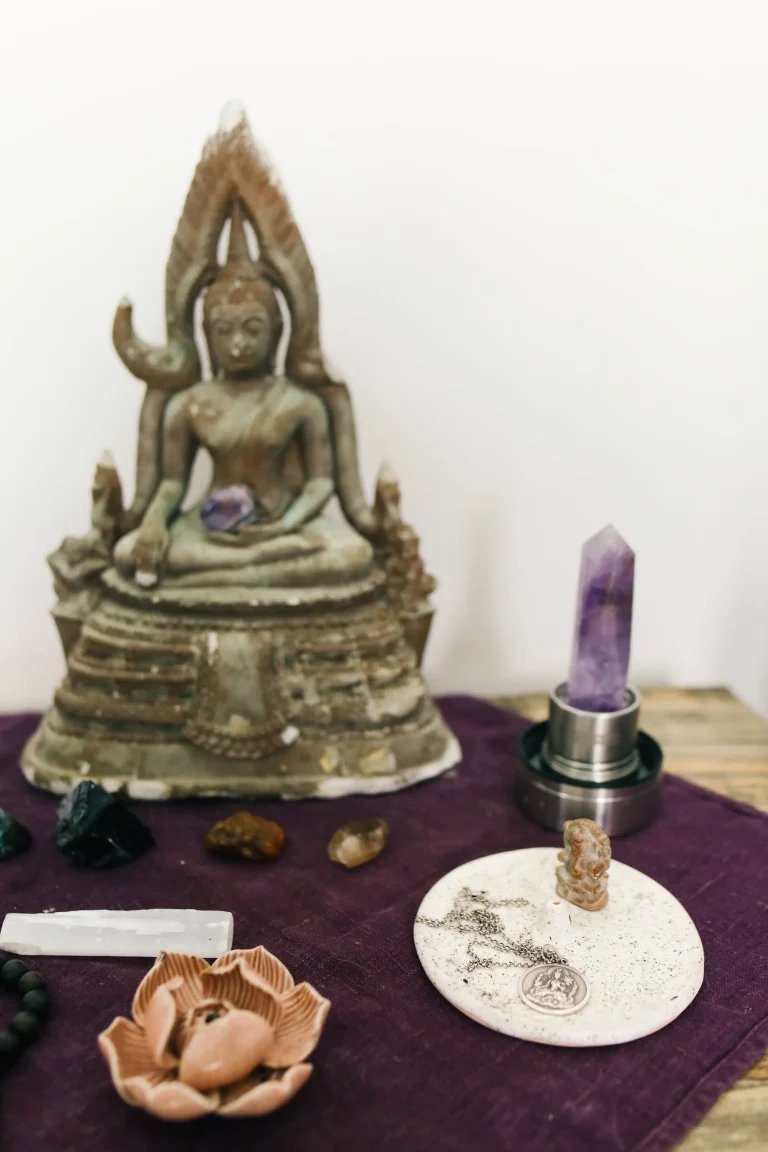
The posture he’s shaping has a precise name: bhumisparsha, the earth-witness gesture. One hand touches the ground to affirm what’s just been reached; the other rests open on the knee, with nothing left to prove. It’s the most recognized form of the historical Buddha across every Buddhist school, but you don’t need to know its name to recognize what it’s telling you: someone who has stopped searching.
You don’t have to share the practice to feel what the posture carries. A lot of people keep a statue like this without treating it as an object of devotion at all, just a presence, on a shelf, that reminds you arriving somewhere is possible.

Each statue comes in two sizes, roughly 12-15cm and 25-30cm, delivered in a cotton pouch. A dry cloth now and then is all the upkeep it needs: no water, no products, just time continuing the work copper has always done on its own.