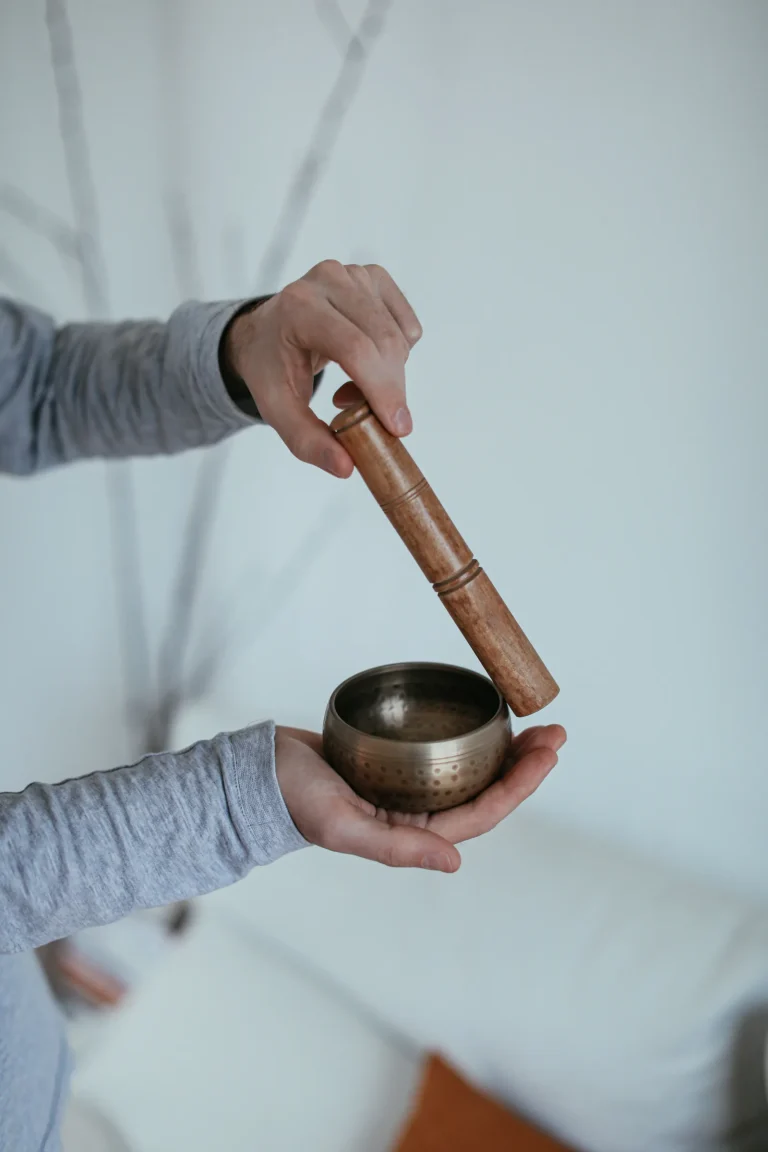
108 Times, Under Yeshi’s Hands
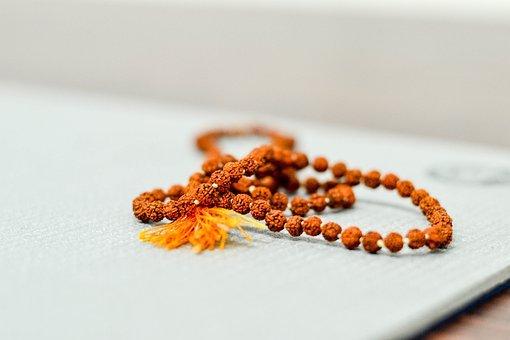
One hundred and eight beads. Each hand-engraved, one at a time, with the same six syllables: Om Mani Padme Hum. Then each filled with white pigment, so the mantra stays legible against the dark stone for years. Then each knotted separately on braided silk cord, so it rests alone between the fingers at the moment of counting.
Call the person who does this work Yeshi. Like the other artisans you’ve met in this series, this isn’t a traceable individual: it’s a real trade, passed down in the Tibetan mala-making tradition, given a voice here to tell it properly.
One hundred and eight identical engravings, and yet none of them are quite the same, the hand shifts slightly from bead to bead, a stroke a little heavier here, a little finer there. That’s what separates a hand-made mala from a mass-produced one: repetition doesn’t erase the hand, it reveals it.
The number 108 isn’t arbitrary. In Buddhist cosmology, it represents the 108 afflictions of the human mind, a number large enough that you can’t hold the whole thing in your head at once, which might be the point: you count one bead at a time, without trying to resolve everything in a single move. Black agate is chosen for its hardness, which allows fine engraving without chipping, and for how cleanly it holds the white pigment, year after year of wear.
A larger guru bead marks the turning point in recitation, you don’t count it, you simply reverse direction on reaching it. A small silk tassel hangs from it. The full necklace runs about 80cm, long enough to wear simply, between sessions, as jewelry that has a function before it has a style.
You don’t need to recite the mantra to wear this necklace. A lot of people just keep it around their neck, a quiet reminder, and only take it in hand when they feel the need to, which, in its own way, is already a form of practice.