Tibetan Singing Bowl: Sound, Vibration, and How to Use One in Meditation
A Tibetan singing bowl produces sound when struck or when a mallet is drawn around its rim. That basic physical fact describes both the object and its use. The singing bowls at Artisan d’Asie are hand-hammered copper, made in Lhasa, Tibet by craftspeople working with techniques passed across generations.
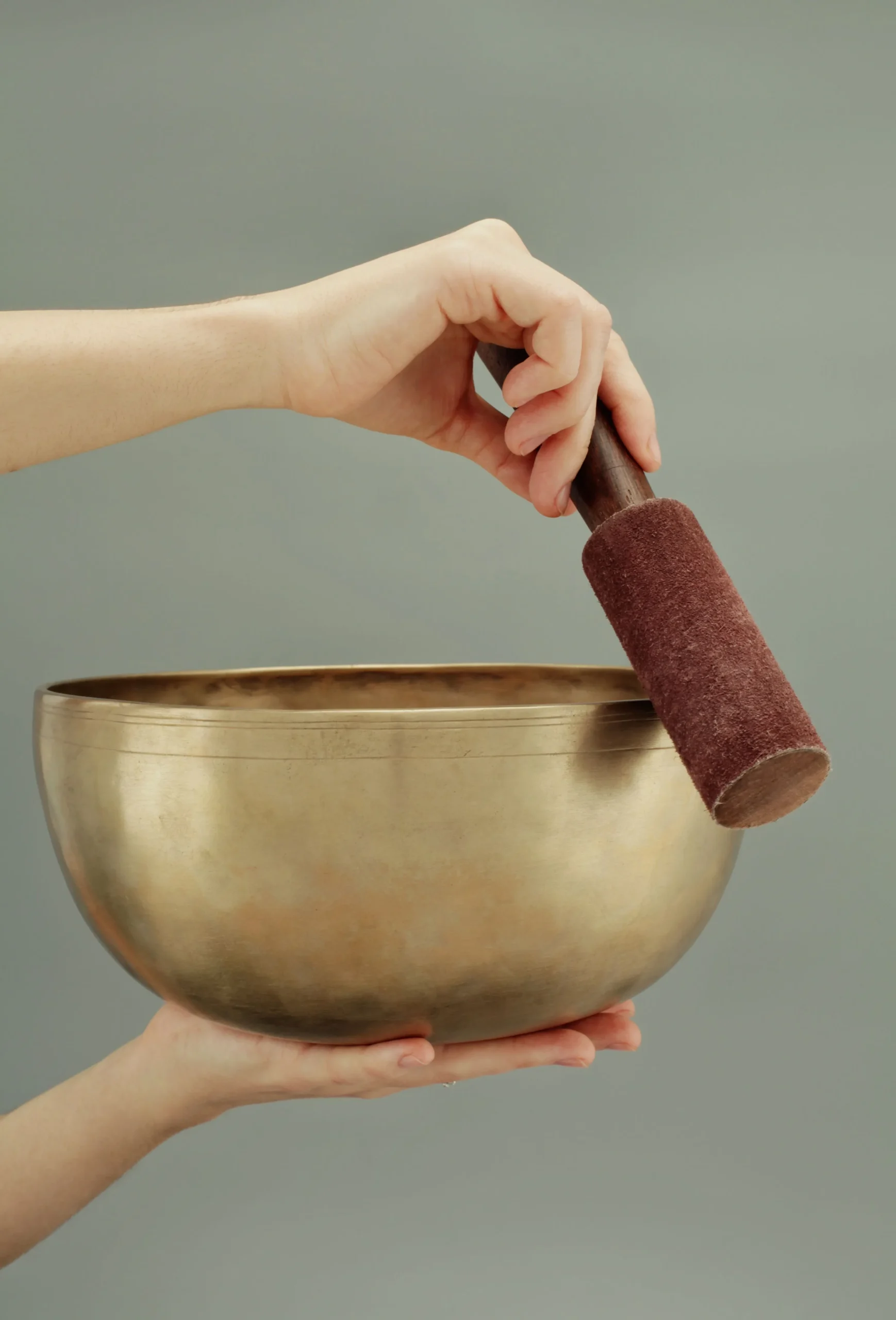
What a Tibetan Singing Bowl Is
A Tibetan singing bowl is an open metal vessel designed to vibrate and sustain sound when activated. Traditional bowls are made from hand-hammered copper or copper alloy. Some antique examples incorporated multiple metals, but contemporary artisan bowls are typically copper, sometimes with tin or zinc to adjust the resonance profile.
Wall thickness and diameter together determine pitch and sustain. Thin-walled bowls vibrate easily and produce higher, brighter tones. Thick-walled bowls require more energy to activate and produce lower, longer-sustaining tones. A small bowl (under 5 inches in diameter) rings in the upper register; a large bowl (8 inches and above) produces bass tones that decay slowly over many seconds.
How the Sound Works
Sound from a singing bowl is produced by vibrating the metal wall. Two methods drive that vibration: striking the bowl with a mallet, and drawing the mallet around the rim.
When struck, the mallet transfers kinetic energy to the metal. The wall deforms slightly and springs back, oscillating at its natural resonant frequency. Those oscillations displace the surrounding air and produce sound. The slow decay reflects how little energy the copper loses per oscillation cycle.
When the mallet is drawn around the rim, friction continuously feeds energy into the wall. The bowl sustains a steady, uninterrupted tone. This is the same physical mechanism as running a wet finger around the rim of a crystal glass. The result is a standing wave: the bowl’s geometry causes pressure nodes and antinodes to form at fixed positions around the circumference.
Each bowl has a fixed resonant frequency determined by its dimensions and metal composition. That frequency is what you hear as a musical pitch, and it does not change between uses.
How to Use a Tibetan Singing Bowl
Strike technique
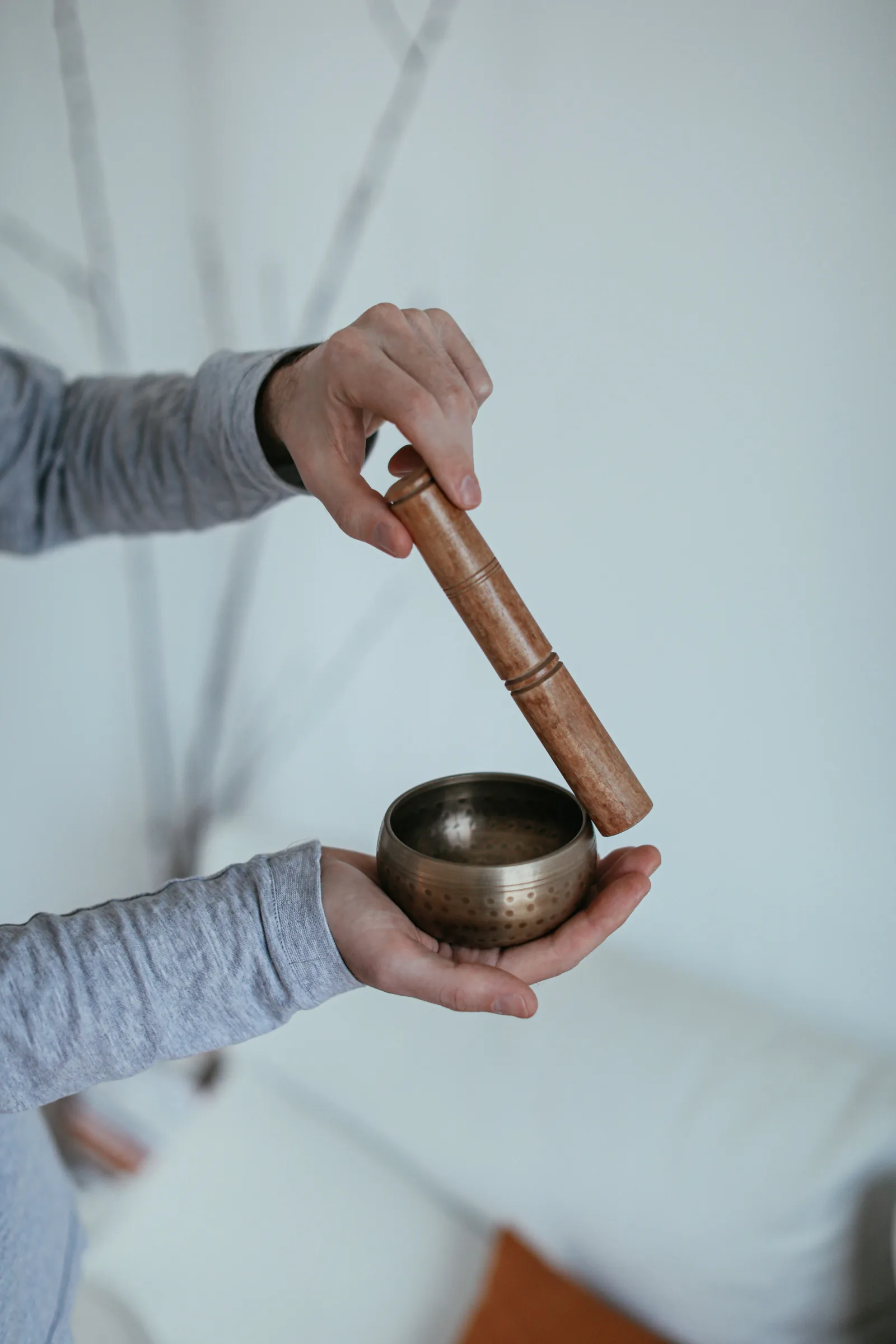
Rest the bowl on your non-dominant palm with fingers flat and extended, not cupped. Hold the mallet in your other hand with thumb and forefinger forward. Strike the outer wall at one-third of its height using the padded end of the mallet. Allow the sound to decay before striking again. For a clear tone, keep the palm relaxed; contact between fingers and the wall dampens vibration.
Rim technique
Place the bowl on a flat surface or hold it on your palm. Hold the mallet vertically, grip near the top as you would a pen. Apply light outward pressure against the outer rim and draw the mallet clockwise at a steady speed. Adjust pressure and speed until the tone sustains. If the sound drops out, increase speed slightly. If the bowl produces a harsh metallic rattle, ease the pressure.

Clockwise activation
Clockwise movement is the Tibetan convention for activating and circulating energy; counterclockwise is used for purification and dissolution. This distinction is cultural, not acoustic: the sound produced is physically identical in either direction.
Sound in Meditation Practice
In seated meditation, a singing bowl typically marks the opening and close of a session. A single strike at the beginning sets an anchor for attention; a strike at the end signals the transition back out. During practice, the bowl can be used to return scattered attention without verbal instruction.
For space clearing, the bowl is activated in continuous rim technique and moved through a room, particularly into corners where air circulation is low. This practice appears across Tibetan Buddhist and shamanic traditions as a method for clearing residual energy before ritual or meditation.
In group settings, a bowl of 8 inches or larger produces enough volume to carry across a room without amplification. Smaller bowls are suited to individual or close-proximity practice.
Choosing Your First Singing Bowl
For individual meditation use, a bowl between 5 and 6 inches in diameter is a practical starting point. It sits comfortably in the palm, produces a tone audible in a standard room, and is easy to handle during the rim technique.
To assess wall thickness before buying, hold the rim between thumb and forefinger: a thin wall vibrates from light contact; a thick wall requires deliberate pressure. Thin-walled bowls are more reactive but less durable; thick-walled bowls are more robust and produce lower pitches.
Sound duration after a single strike is a useful quality indicator. A well-made artisan bowl sustains for six to twelve seconds. A decay of under three seconds generally indicates low-quality casting or an overly thick wall that absorbs energy rather than transmitting it.
In Our Shop
Our Tibetan singing bowls are hand-hammered copper, made in Lhasa, Tibet. Each bowl is selected for the quality of its resonance and construction.
- Hand-Hammered Copper Singing Bowl
- Copper Buddhist Singing Bowl with Inscriptions
- Browse all singing bowls
Version française : Bol Tibétain : Son, Vibration et Utilisation en Pratique de Méditation