This Pendant Comes From Lhasa. It Opens.
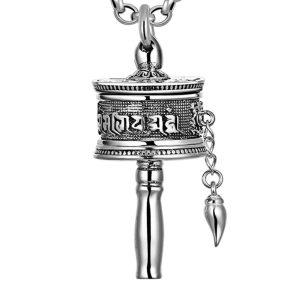
This pendant comes from Lhasa. It opens. Inside the silver cylinder, a mantra is rolled onto a metal scroll. Each rotation of the cylinder performs the gesture of recitation. Tibetan Buddhist tradition holds that this is sufficient.
The prayer wheel in Tibetan tradition
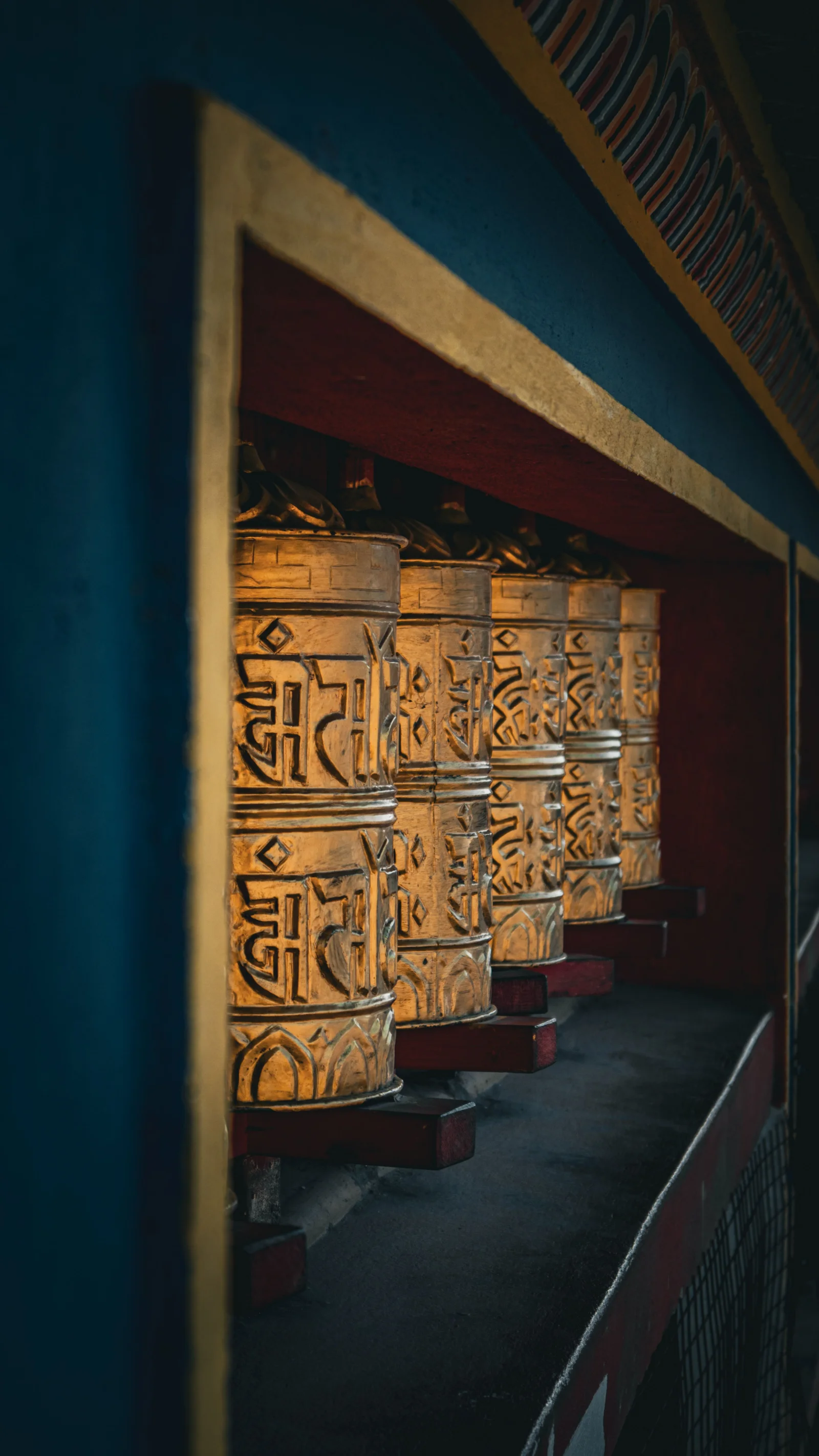
The prayer wheel — mani chos khor in Tibetan — is a cylinder that rotates around a central axis. It contains a mantra, most often Om Mani Padme Hum, rolled inside. According to Tibetan Buddhist belief, each rotation of the cylinder is equivalent to the recitation of the mantra, extending its effects to the wearer and those nearby.
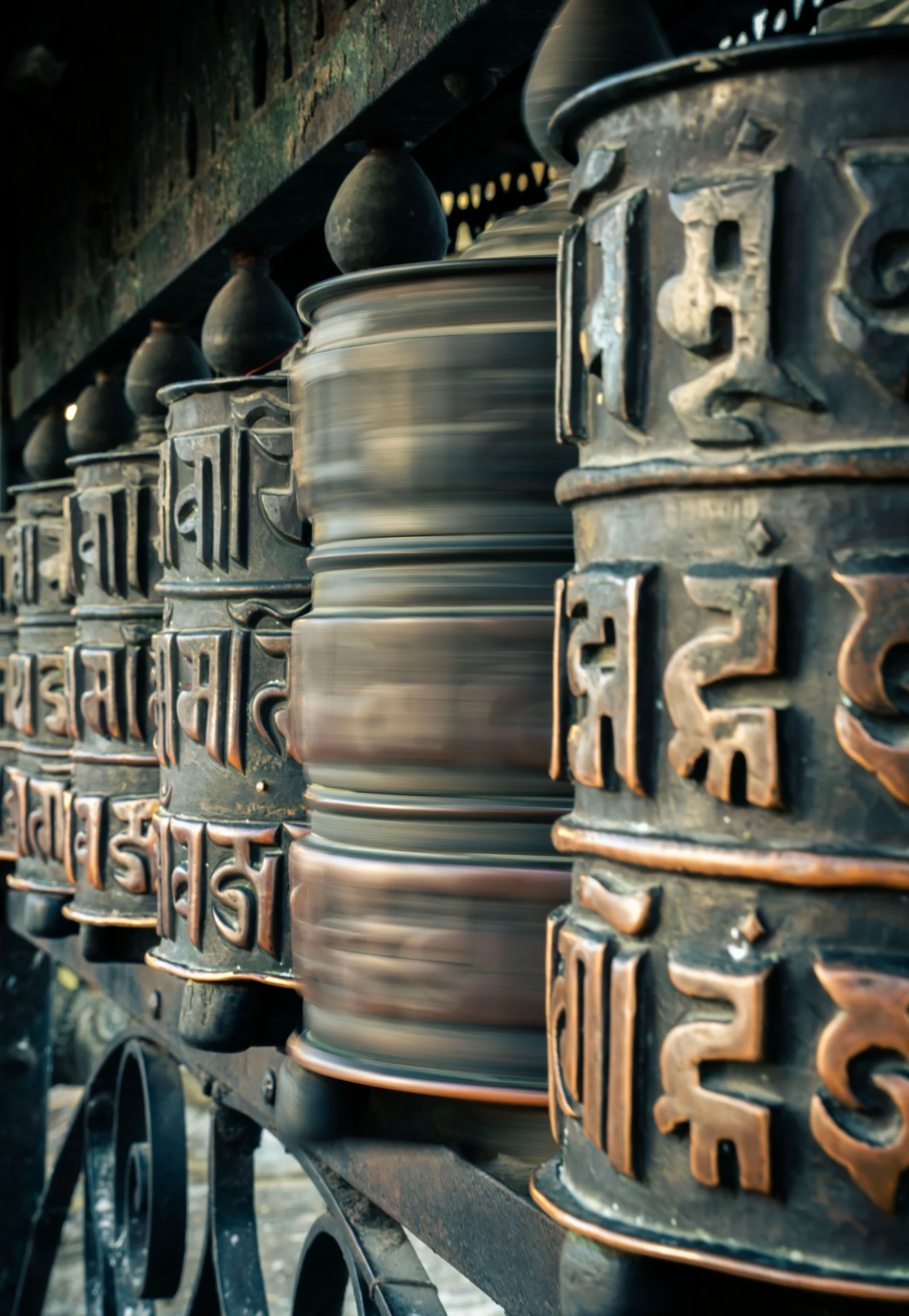
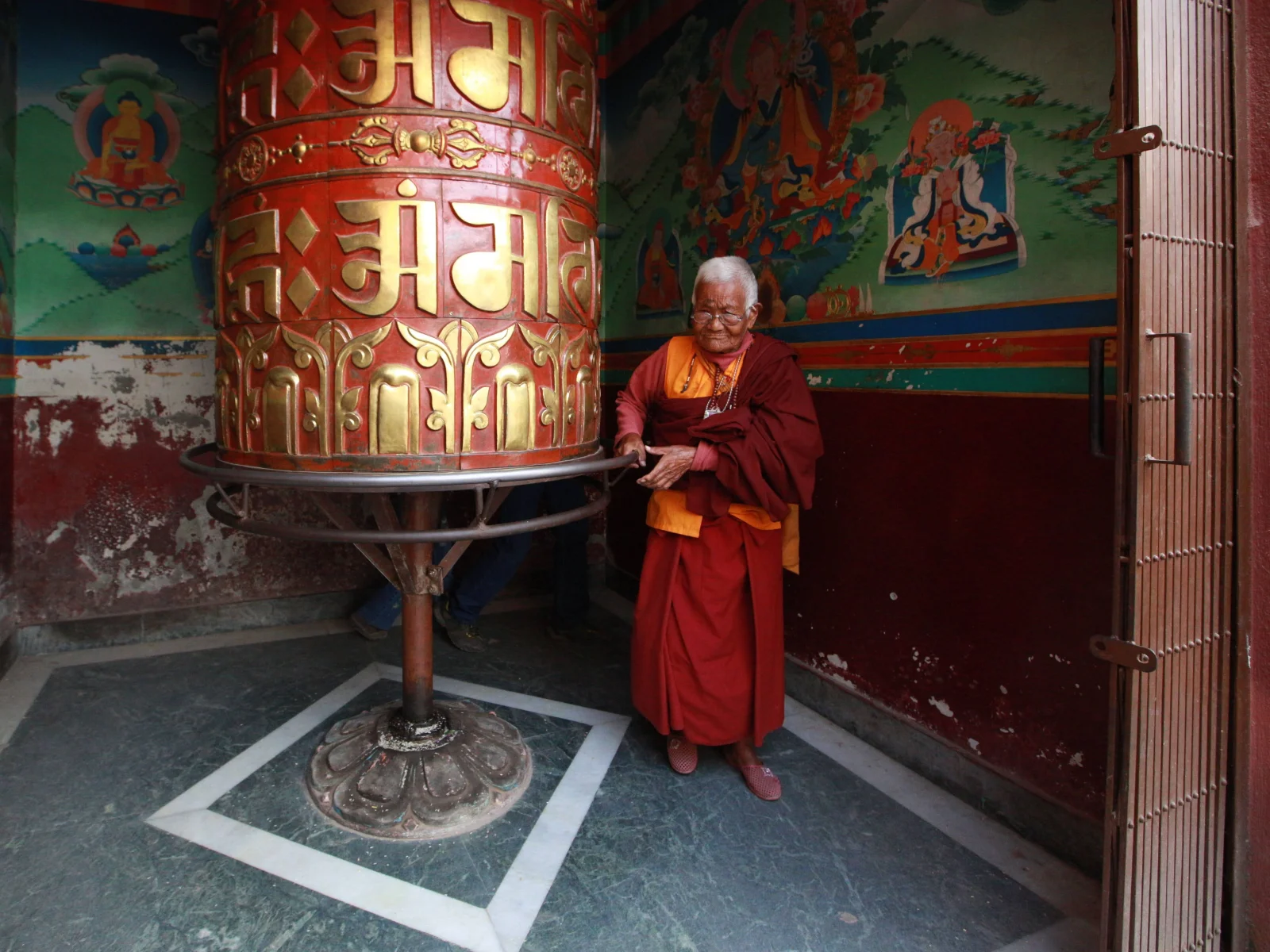
Prayer wheels exist in several formats: the large wheels fixed to temple walls, which pilgrims activate as they pass; hand wheels carried during walking; and miniature wheels integrated into portable objects — necklaces, pendants, rings.
Made in Lhasa by Tibetan artisans
These pendants are made in Lhasa by Tibetan artisans whose silversmithing practice has been passed down through generations. The cylinder rotates freely on its axis. The mantra Om Mani Padme Hum is engraved on the outer cylinder. The inner scroll carries the full mantra.
Each piece may show slight variations in finish, characteristic of handmade work. This is not a defect — it is the mark of one-by-one production by an identified artisan.

The pendant
OM Mantra Prayer Wheel Pendant — Solid Silver S925 with Lotus Flower
Forged in Lhasa by a Tibetan artisan · Om Mani Padme Hum scroll included · 45cm chain
€79.00
Models available
- Prayer wheel pendant with lotus flower, solid silver S925 — €79.00 — Om Mani Padme Hum engraved cylinder, fine chain.
- Prayer wheel pendant, pure silver 999 — €79.48 — 99.9% silver purity, functional cylinder.
- Miniature functional prayer wheel pendant, pure silver 999 — €51.24 — compact format, cylinder opens.
- Tibetan copper prayer wheel, artisanal alloy — €22.68 — hand format, copper and alloy, for walking or meditation.

What is the Om Mani Padme Hum mantra?
Om Mani Padme Hum is the mantra of Avalokiteshvara, the bodhisattva of compassion, particularly venerated in Tibetan Buddhism. Each syllable is associated with an aspect of practice. The mantra has been recited, chanted, and carved on stones and wheels since at least the 7th century in Tibetan regions.
How do you use a prayer wheel pendant?
The cylinder turns clockwise. A light press of the thumb on the cylinder is enough to set it in motion. It can be activated during walking, during a moment of pause, or before meditation. The pendant is worn on a chain around the neck or held in the hand.
Why does the cylinder open?
The cylinder opens to allow the mantra scroll inside to be inserted or replaced. It is also a way to verify the mantra’s presence. This opening is a feature of authentic Tibetan prayer wheels.
Tibetan prayer wheel pendant in silver S925, Lhasa — €79.00
Version française : Lire en français
In our shop
-

-
-
-
Dragon Moonstone Round Pendant – Sterling Silver 925
Price range: €69.00 through €99.00Secure Yours This product has multiple variants. The options may be chosen on the product page