Laughing Buddha Meaning & Buddha of Compassion: How to Choose Your Buddha
Laughing Buddha meaning, Buddha of Compassion, meditating Gautama, or the Buddha of Infinite Light: choosing a Buddha statue is a more specific question than it first appears. This guide gives you the keys to choose with real understanding, whether it’s for your home, your meditation space, or a practice of quiet reflection.
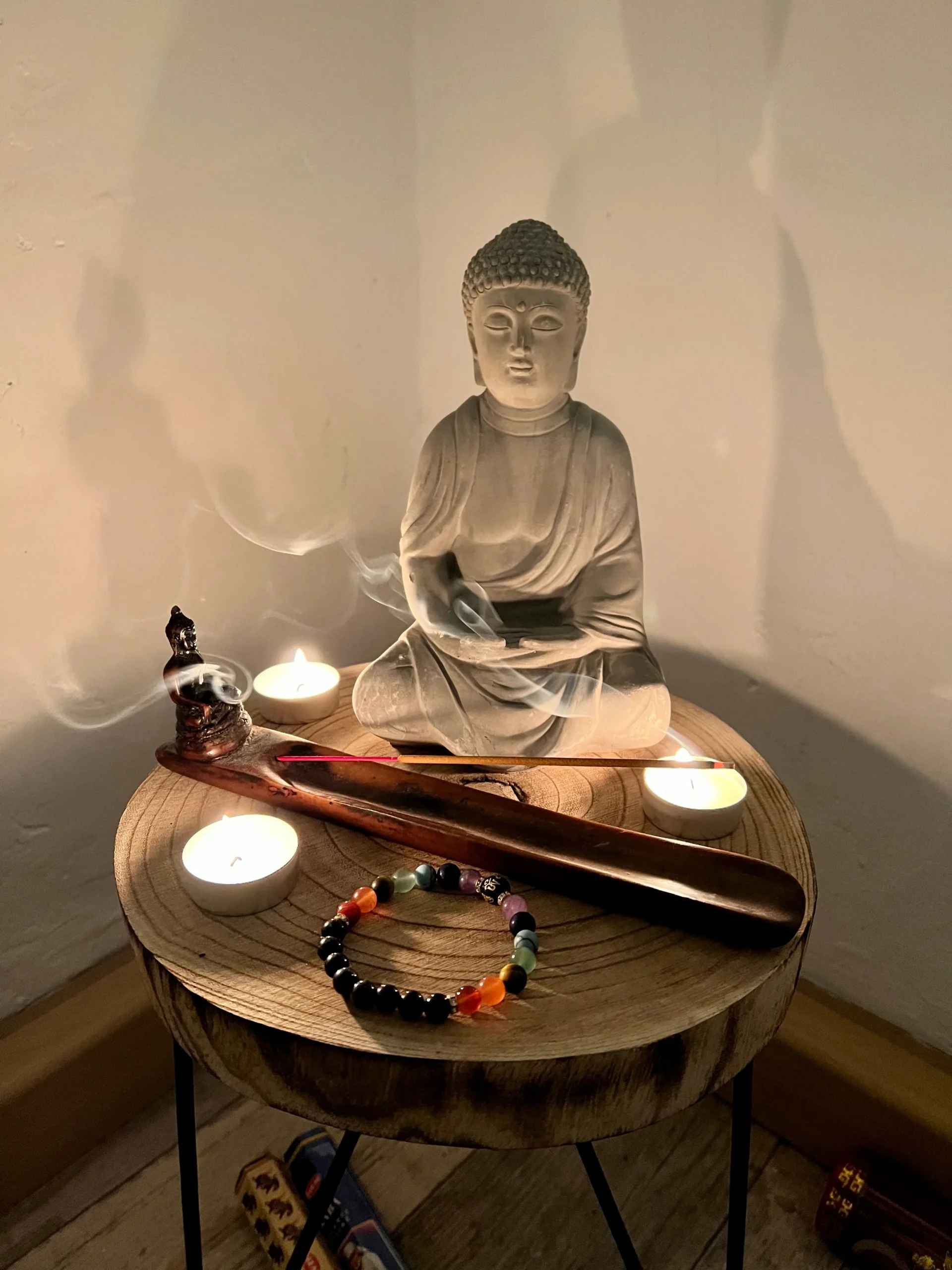
Choosing a Buddha statue means understanding which figure it represents, its posture, its material, and where to place it, a decision rooted in centuries of Buddhist and East Asian tradition.
There are several Buddhas, not just one
Not every Buddha statue represents the same figure. “Buddha” means “the Awakened One” in Sanskrit, and describes any being who has reached awakening. Several exist within Buddhist tradition. Here are the four most common.
Laughing Buddha meaning (Maitreya / Budai)
The Laughing Buddha, with his round belly, is not strictly a Buddha at all: he is a Taoist figure of prosperity (the God of Abundance) fused with the future Buddha Maitreya in Chinese tradition. He symbolizes joy, generosity, and abundance. Often chosen for the home and for Feng Shui placement.
Buddha Gautama (Shakyamuni)
Siddhartha Gautama is the historical founder of Buddhism, born in India around 2,500 years ago. His representation is codified and instantly recognizable: a protuberance atop the skull, elongated earlobes, a simple robe, seated on a lotus. This is the most common form for meditation altars.
Nos Statues de Bouddha
Chaque statue est sculptée à la main. Mudra, posture et iconographie respectés.
Voir les statues de Bouddha →Buddha of Compassion (Bodhisattva Guanyin)
Guanyin is the personification of compassion in East Asian Buddhism, and the figure most people are reaching for when they search for a “Buddha of Compassion.” Often depicted in female form in China and Japan, she is always ready to answer suffering. She sometimes holds a vase of pure water, or stands on a lotus or a dragon. Ideal for a space oriented toward compassion and benevolence.
Buddha Amitabha
Amitabha, “Infinite Light,” is the Buddha of another realm known as the Pure Land. He represents hope, welcome, and protection. Very popular in China, Japan, and Vietnam. His representation is close to Gautama’s, sharing the same physical markers typical of Buddhas.
Buddha positions and mudra meaning
A statue’s posture is the first thing to read. It is not decorative: it points to a specific state or teaching.
- Seated Buddha, the most common posture. Read by the hand gesture (mudra): meditation (hands joined on the lap), awakening (right hand touching the earth), giving (open palm facing the viewer), teaching (hands at the chest, thumb and index finger joined).
- Reclining Buddha, represents the Buddha at the moment of entering nirvana. Evokes detachment, absolute rest, the end of suffering.
- Standing Buddha, solemnity and active presence. The same hand gestures apply, except for meditation and awakening.
- Walking Buddha, rarer, found mostly in Thailand. Represents the wish to go out and meet all beings.
What to look for in a hand-carved statue
The first impression a quality hand-carved statue gives is always the same: a sense of calm and serenity radiating from the face. This is the number one criterion recognized by Chinese and Asian artisans for centuries, a sculptor’s skill is judged by the expression on the statue.
Here are the four points to check:
- The face, the expression should convey peace, not indifference or rigidity. A subtle smile, half-closed eyes, a calm brow.
- The fineness of the carving, details on the body, clothing, and hands should be precise. The finer they are, the more experienced the artisan.
- The painting, if the statue is painted, the details should be meticulous, without bleeding or rough patches.
- Hand-carved versus mass-produced, a hand-carved statue shows slight variation from one piece to the next. That is normal, and it is the mark of authenticity. A mass-produced statue is perfect and interchangeable, which strips away what matters most.
Where to place your Buddha statue
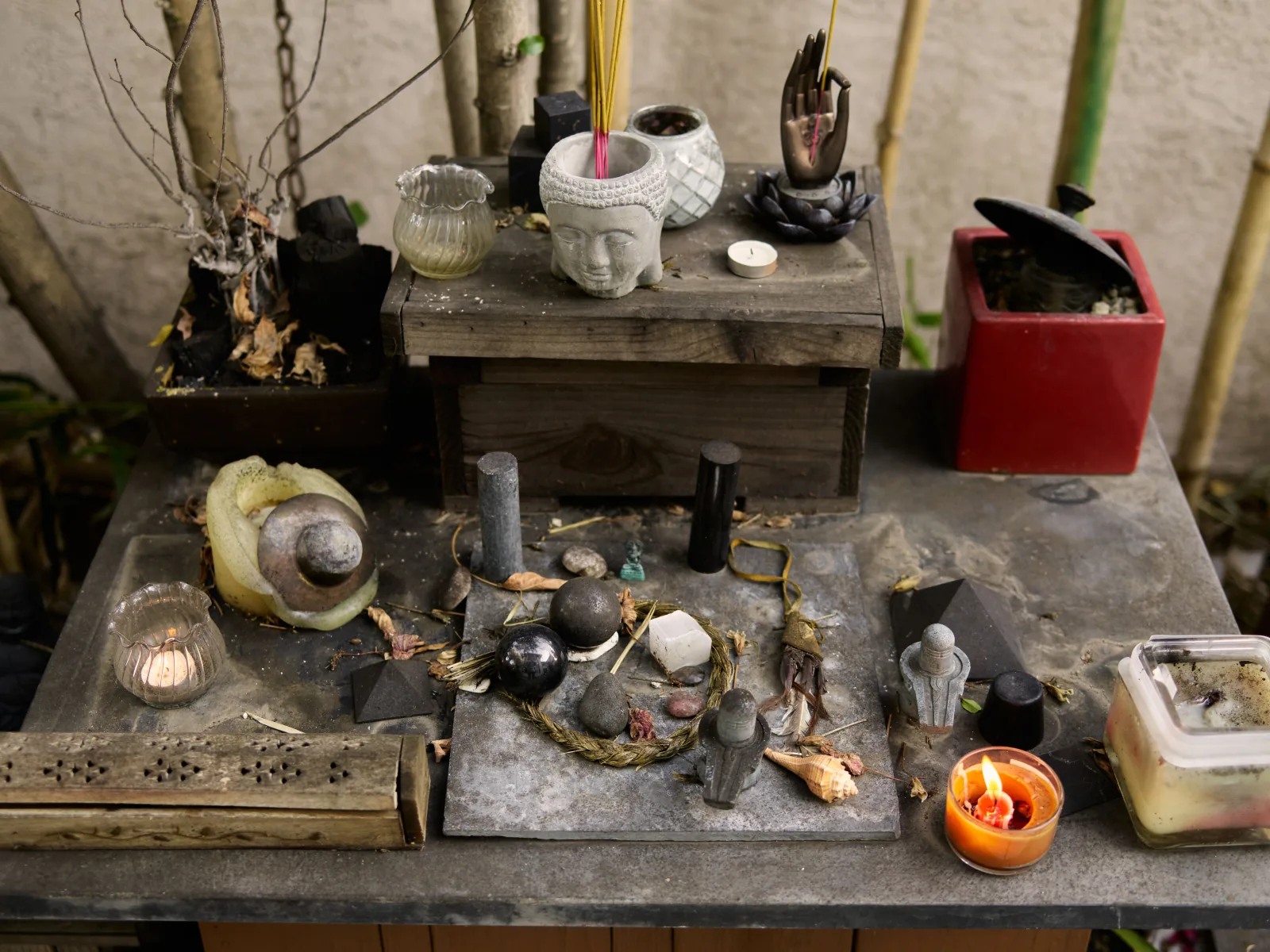
Where a statue sits in a room is not a minor detail in Buddhist and Chinese tradition.
For meditation, place the statue up high, on a piece of furniture or an altar, surrounded by elements tied to practice: incense, candles, a mala. Nothing unrelated to Buddhism should share that space.
For the home, living room, hallway, workspace. Avoid rooms with water (bathroom) and bedrooms, or keep the statue in a closed cabinet while you sleep. Never place it directly on the floor: in tradition, that is considered disrespectful. Always place it at the highest position in the room.
Avoid: pointing at the statue, placing unrelated objects above it, and letting dust accumulate, regular care is part of the respect owed to the object.
Which Buddha to choose for your intention
There is no absolute rule. The choice remains personal. A few reference points:
- You’re looking for joy, prosperity, a bright presence for your home → Laughing Buddha (Maitreya), seated or reclining.
- You have a meditation or prayer practice → Gautama or Amitabha, seated.
- You want a presence of compassion, a feminine anchor → Guanyin, seated or standing.
- You’re just starting out with no specific tradition → choose first by what the statue makes you feel. Peace is the right sign.
Our collection includes copper Amitabha Buddha statues, Laughing Buddha statues, and carved boxwood Guanyin statues, all hand-made by artisans in China, Tibet, and Nepal.
Frequently asked questions
Q: Can you own a Buddha statue without practicing Buddhism?
A: Yes. In many homes across Asia, statues are present for their symbolic energy and their presence in the home, without formal religious practice. What matters is treating them with respect.
Q: Is a Buddha head alone acceptable?
A: A head alone is acceptable as a display piece. In some Buddhist traditions it is considered disrespectful in a prayer context, where a complete statue is preferable.
Q: What material to choose, copper, wood, ceramic?
A: Copper and brass are traditional for meditation statues: durable, dense, and rich with meaning in Himalayan traditions. Boxwood or sandalwood is softer, warmer, suited to a living space. Ceramic suits a lighter, everyday presence.
Q: Does a statue need to be blessed before use?
A: In some traditions (notably Tibetan and Thai), statues are blessed by a monk before use. It is not required, the intention with which you welcome the statue into your space carries its own value.
Choosing a Buddha is choosing a presence. Take the time to look at it. The right statue is the one in front of which you feel calmer than before you looked.
Discover how to create a space for quiet reflection at home →
Artisan d’Asie
Every Buddha we offer has been selected according to the criteria described in this guide.
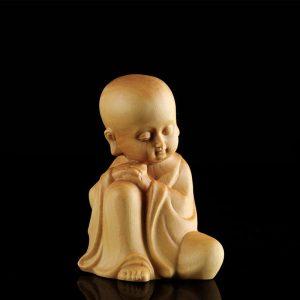
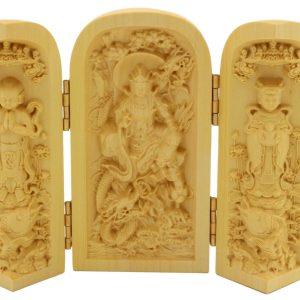
You may also like
Our Buddha statues are hand-forged by specialized artisans.
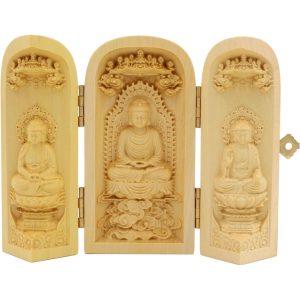

Get the Sanctuary Blueprint, a free practice guide
Get the Sanctuary Blueprint, free
Five practices, one object, one anchor. Download the Blueprint.
Buddhas and Bodhisattvas available at Artisan d’Asie
Bodhisattva Guanyin, goddess of Compassion in Chinese and Japanese Buddhist traditions: boxwood carving from Korea, Guanyin Statue in Boxwood.
Amitabha is the Buddha of Infinite Light: a pendant in pure 999 silver to carry his energy of universal compassion, Amitabha Buddha Pendant, 999 Silver.