Lady Buddha of Da Nang: Meaning and Why People Bring Her Home
The Lady Buddha of Da Nang meaning is rooted in one of Buddhism’s most recognized figures: Guanyin, the Bodhisattva of Compassion, standing 67 meters tall over the Son Tra Peninsula in central Vietnam. Millions of travelers climb Monkey Mountain each year to stand at her feet. Fewer know why she was built, what her gestures mean, or why the same figure sits quietly on altars and shelves in homes far from Vietnam.
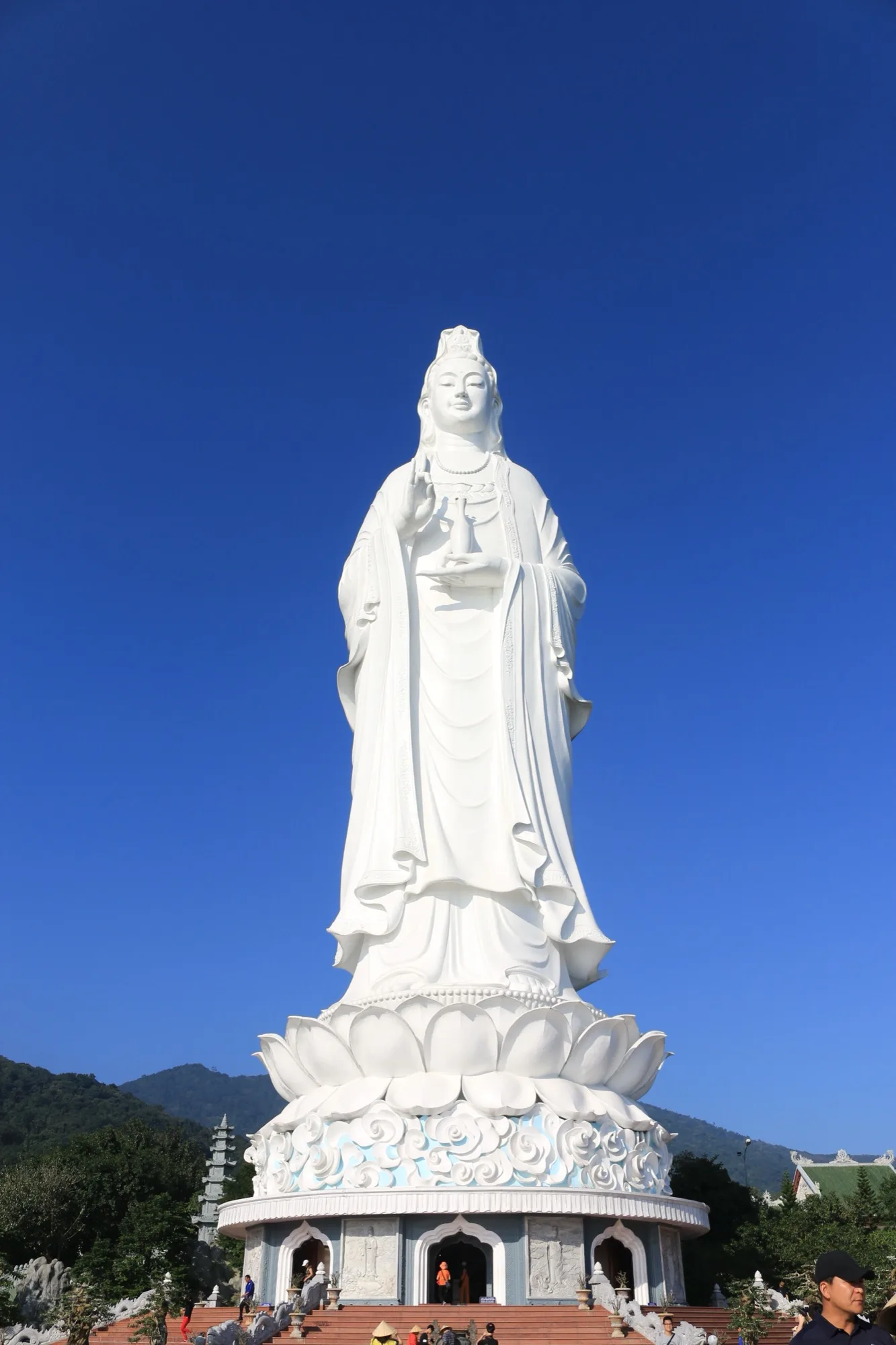
Who is the Lady Buddha of Da Nang?
The statue stands at Linh Ung Pagoda on the Son Tra Peninsula, about 10 kilometers northeast of central Da Nang. Construction began in 2004 and finished in 2010, carved by sculptors Thuy Lam and Chau Viet Thanh with artisans from the Non Nuoc marble village nearby, the same craft tradition responsible for much of the region’s stone carving. At 67 meters, she is the tallest statue of her kind in Vietnam, standing on a 35-meter lotus base with 17 interior floors, each holding its own Buddha figure.
Her left hand forms a mudra of blessing. Her right holds a vial of nectar, a gesture tied to the healing of suffering. Both details point to who she actually is: not a separate deity from the Buddha statues sold in temples and shops across Asia, but a specific, monumental form of Guanyin, known in Vietnamese as Quan Am, the Bodhisattva who hears the cries of the world and responds with compassion.
Why she draws millions of visitors
Part of the draw is the view: the statue overlooks the South China Sea from one of the highest points on the peninsula, and the pagoda grounds are genuinely striking. But the deeper draw is devotional. For Vietnamese Buddhists, the site functions as a living pilgrimage destination, not just a photo stop, fishermen and their families have historically sought her protection before setting out to sea. For visitors of every background, she has become a symbol of the same thing Guanyin has represented for over a thousand years: mercy that asks nothing in return.
That dual identity, sacred site and global landmark, is unusual. Few statues carry both at once, and it’s part of why she continues to circulate so widely online, in travel guides, in photographs, in casual conversation, long after most visitors have gone home.
Other great Guanyin statues around the world
Da Nang’s Lady Buddha is the most visited, but not the only monumental Guanyin. Three others define the same tradition on a similarly vast scale.
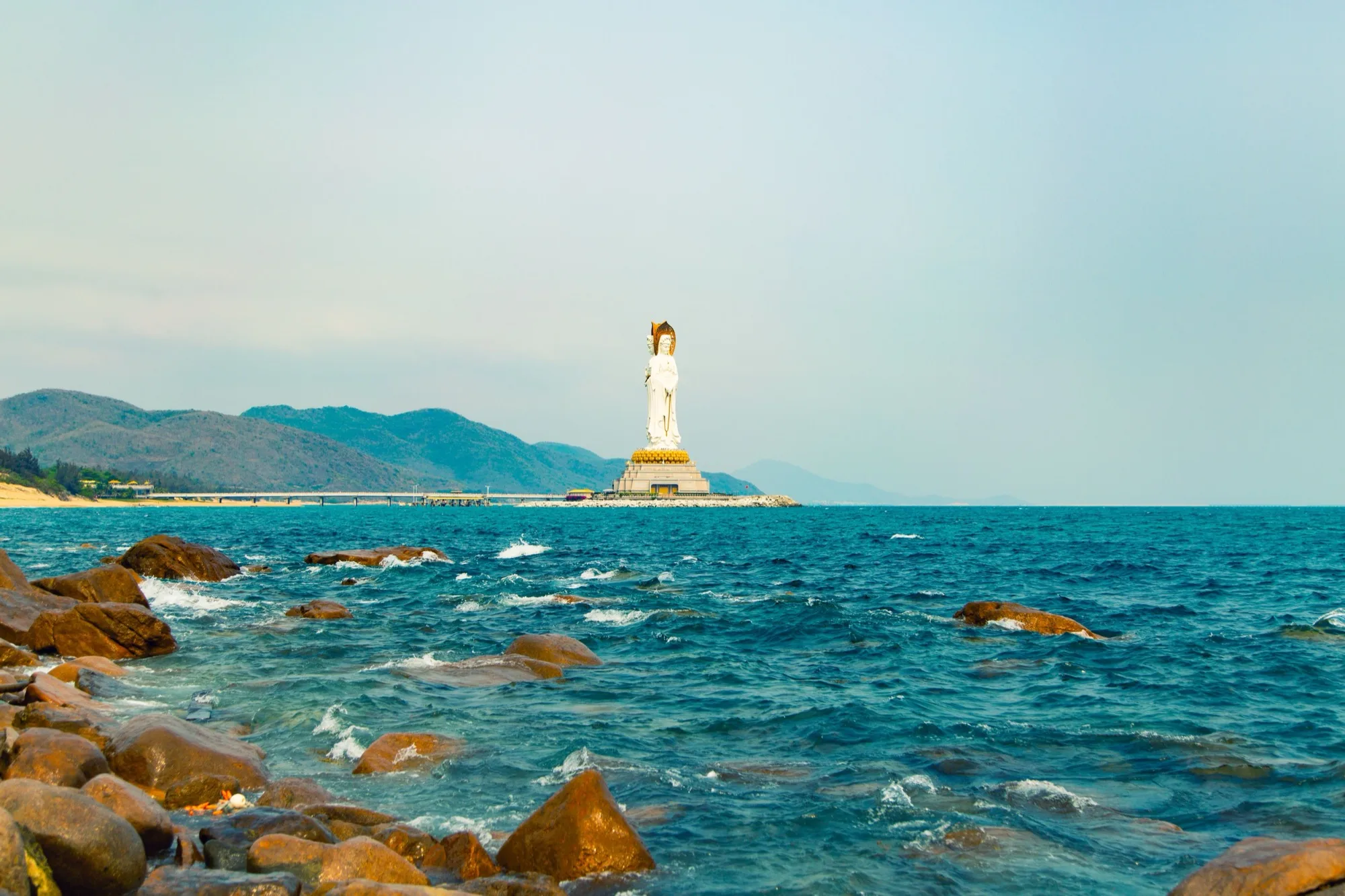
Guanyin of Nanshan, Sanya, Hainan, China. At 108 meters including its pedestal, this is the tallest Guanyin statue anywhere. Enshrined in 2005 after six years of construction, she faces three directions at once: one side toward the mainland, two toward the South China Sea, each carved with a different attribute, a sutra, a string of prayer beads, a lotus.
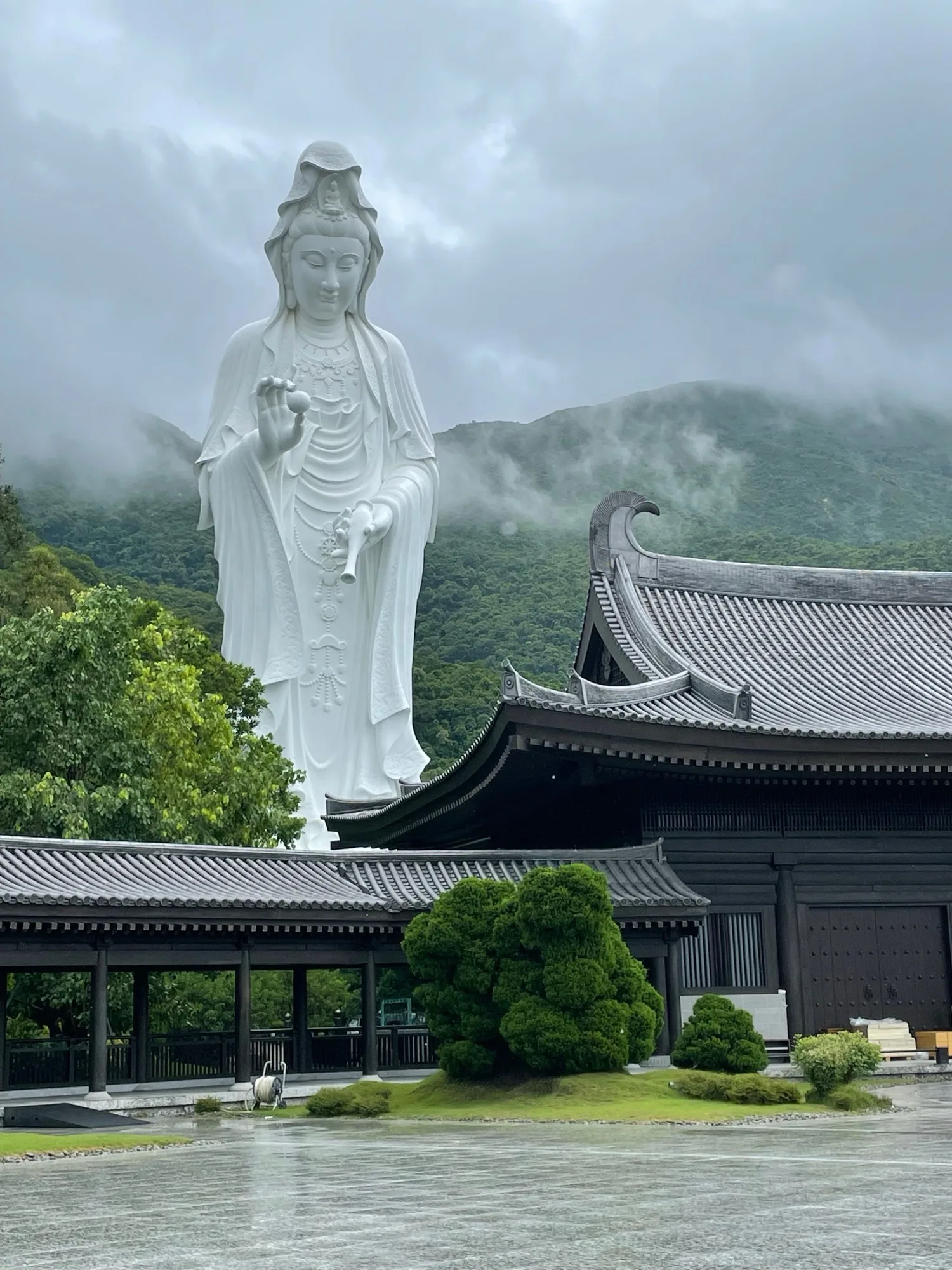
Tsz Shan Monastery, Tai Po, Hong Kong. Completed in 2015 in the hills near Tai Mei Tuk, this 76-meter bronze figure, 70 meters of statue on a 6-meter granite base, is the largest bronze Guanyin statue in the world, twice the height of Lantau Island’s well-known Big Buddha.
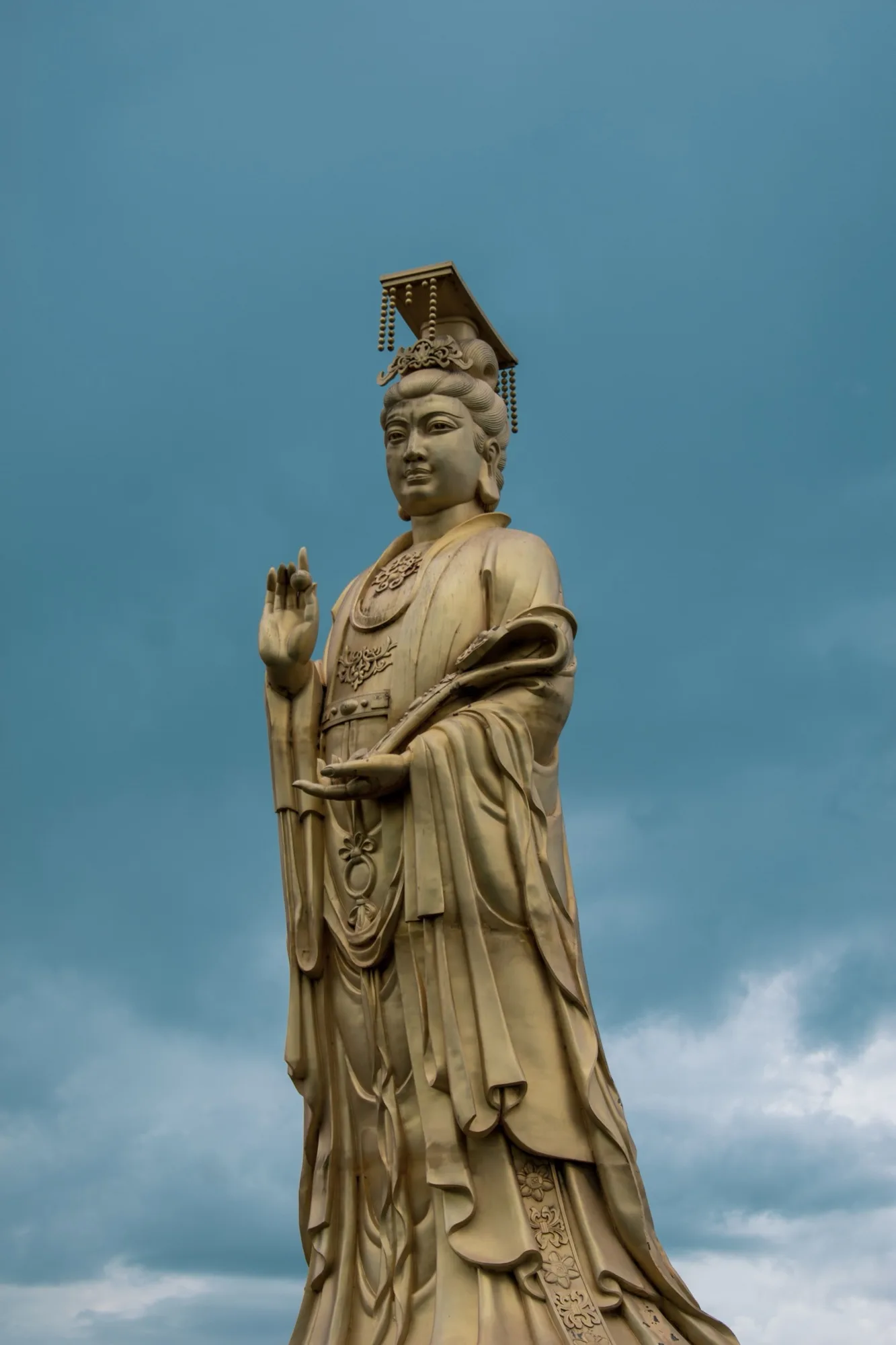
Mount Putuo, Zhejiang, China. Smaller at 33 meters, a number chosen to reflect Guanyin’s traditional 33 manifestations, but arguably the most significant of all four. Mount Putuo is considered Guanyin’s own sacred ground, one of China’s four holy Buddhist mountains, and has drawn pilgrims for over a thousand years.
Why people bring her home
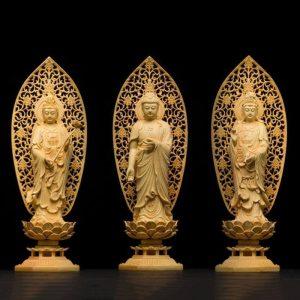
None of these monuments are meant to be owned. What travels instead is the practice behind them: keeping a smaller image of Guanyin somewhere in daily life, a shelf, an altar, a quiet corner of a room, as a personal reminder of the same compassion the giant statues represent at scale. This is the oldest and most common form of devotion in the tradition, far older than any of the monuments above, and it asks for nothing more than a small carved figure and the intention behind placing it.
Our own hand-carved boxwood Guanyin statues follow that same lineage: carved by artisans working in the same tradition as the sculptors of Da Nang and Nanshan, sized for a home rather than a coastline, but carrying the same figure, the same gesture, the same intention.
Frequently asked questions
Q: Is the Lady Buddha of Da Nang the same as Guanyin?
A: Yes. “Lady Buddha” is the common English nickname tourists use for the statue at Linh Ung Pagoda, but she depicts Quan Am, the Vietnamese name for Guanyin, the Bodhisattva of Compassion.
Q: How tall is the Lady Buddha statue?
A: 67 meters, standing on a 35-meter lotus base, making her the tallest statue of her kind in Vietnam.
Q: What is the tallest Guanyin statue in the world?
A: The Guanyin of Nanshan in Sanya, Hainan, China, at 108 meters including its pedestal, enshrined in 2005.
Q: Why do people keep a Guanyin statue at home?
A: As a personal, smaller-scale continuation of the same devotion the large public monuments represent: a daily reminder of compassion, not a replica of any specific statue.
Discover our hand-carved Buddha and Guanyin statues →
Artisan d’Asie
Each Guanyin we offer is hand-carved in the same tradition as the great statues described above.