Who Is Buddha? The Life and Teachings of Siddhartha Gautama
Who is Buddha? The question has a specific answer: Siddhartha Gautama, also known as Shakyamuni, a prince born around 566 BCE in northern India who renounced his palace life, faced human suffering directly, and became the Awakened One. His story unfolds in four stages: birth, awakening, first teaching, and passing.
Quick overview
Buddha, born Siddhartha Gautama Shakyamuni, came from a royal household: his father Suddhodana ruled the Sakya kingdom, his mother was Queen Maya.
Buddhist tradition frames his life in four stages: his birth, his awakening, his first teaching, and his final passing.
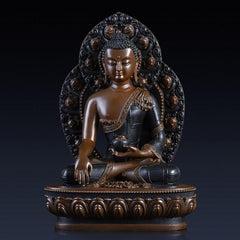 Shakyamuni Buddha statue in pure copper
Birth and early life
His birth
According to traditional accounts, he was born in Lumbini, on the road to Kapilavastu, near the present-day border of India and Nepal. His birth is described as following a prophetic dream of his mother, Queen Maya, who saw herself entered by a white elephant with six tusks.
A week after his birth, the queen died, and the child was raised by her sister and the king’s co-wife, Mahaprajapati Gautami.
Nos Statues de Bouddha
Chaque statue est sculptée à la main. Mudra, posture et iconographie respectés.
Voir les statues de Bouddha →His life as a prince
At 16, he married Princess Yasodhara, with whom he had a son, Rahula. For his first 29 years, Gautama trained in the warrior arts befitting a kshatriya, the warrior caste, kept deliberately apart from suffering and death by a father determined to see him become king.
This sheltered existence ended with four encounters that redirected the course of his life, described below.
The four encounters that changed his life
Raised apart from all suffering, Gautama made four encounters on trips outside the palace that now form the foundation of Buddhist teaching.
Old age
He passed an old man and asked his charioteer what he saw. Learning that old age awaits everyone, he grasped for the first time the fragility of the body.
Sickness
He encountered a sick man and understood that no human being is exempt from physical suffering, at any point in life.
Death
He saw a funeral procession carrying a body to be cremated and realized that death, too, makes no exception.
The wandering ascetic
He finally passed a sadhu, a wandering holy man in India, and saw in him a possible path toward an answer to suffering. This fourth encounter was what led him to leave his wife, son, and kingdom to devote himself fully to the search for truth.
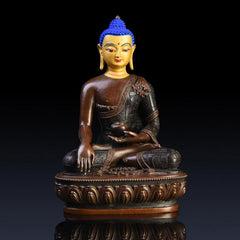 Shakyamuni Buddha statue in copper
The awakening of Buddha
For six years, Gautama wandered the Ganges valley, studying under recognized teachers and submitting to rigorous ascetic practices, without finding an answer. He chose another path instead: meditation.
Settled alone by a river, he made himself a promise not to rise until fully awakened. One morning, after days and nights of concentration, complete awakening arrived: Siddhartha Gautama became Buddha, at the age of 35.
This experience, a fullness of wisdom and compassion, marked the start of 45 years of teaching, until his death. By tradition, this path was meant to stay accessible to everyone, at all times: this Indian prince turned Buddha founded what would become Buddhism.
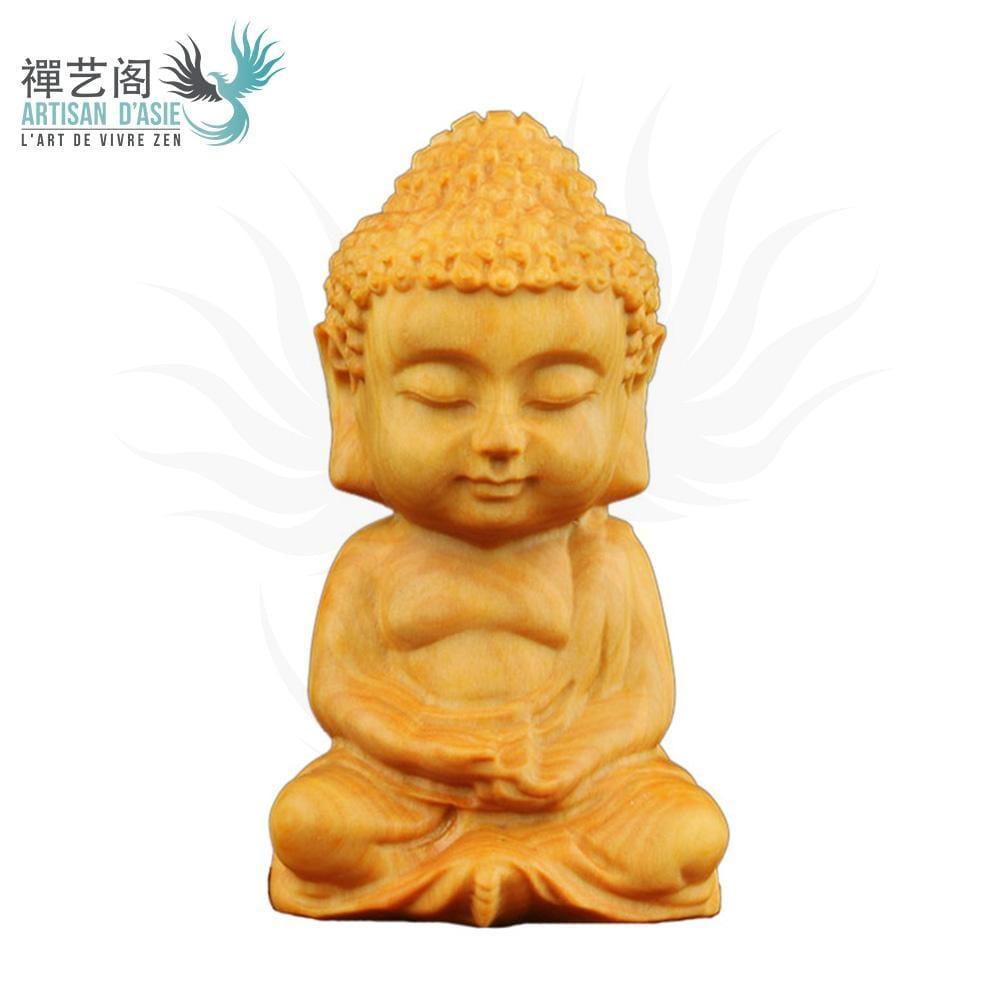 Siddhartha Gautama Buddha statuette
The founding teachings
At the core of his teaching sit the Four Noble Truths: existence involves suffering (dukkha), that suffering has an identifiable origin (attachment and craving), it can cease, and a specific path leads there. That path, the Noble Eightfold Path, covers right view, right intention, right speech, right action, right livelihood, right effort, right mindfulness, and right concentration.
Buddha presented this path as a Middle Way, set at equal distance from the excess of pleasure he had known in the palace and the excess of asceticism he practiced during his six years of wandering. He taught for nearly 45 years, to people of every social condition, that awakening is reached through direct experience rather than belief alone. He was insistent on this point with his followers:
His passing
Tradition speaks of a complete passing rather than a death. The dates remain approximate, but Buddha is said to have died in northern India at age 80, lying on his right side, in deep meditation. His last words, according to the accounts:
Character and physical representation
Across the accounts handed down, several traits recur constantly: a teacher able to find the right words for any audience, steadiness in the face of adversity, and a mastery recognized across many domains.
In traditional statuary, Buddha Gautama is represented with a robust build: golden skin, blue eyes, elongated ears, iconographic markers that recur consistently from one piece to the next.
This biography of Buddha Gautama lays the groundwork for understanding the symbolism carried by every Buddha statue in Asian tradition, and for choosing the Buddha that matches your own intention.
In our shop
-

-
-
-
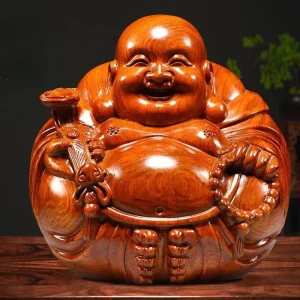
Laughing Buddha Maitreya Statue | Hand-Carved Rosewood, Ebony & Red Rosewood
Price range: €79.88 through €199.88Secure Yours This product has multiple variants. The options may be chosen on the product page
Frequently asked questions
Who was Buddha Gautama?
Buddha Gautama, born Siddhartha Gautama, was a prince born around 566 BCE in northern India. After renouncing his palace life, he reached awakening at 35 and taught for 45 years, becoming the founder of Buddhism.
How did Buddha reach awakening?
After six years of rigorous ascetic practice with no result, Gautama settled by a river and devoted himself entirely to meditation, reaching complete awakening one morning at the age of 35.
What are Buddha Gautama's core teachings?
Buddha taught that awakening is accessible to everyone through direct experience rather than belief, urging each person to test his teachings for themselves before accepting them.