Rosewood Qi Gong Health Balls
€53.88
The rosewood Qi Gong health balls are a pair of solid turned rosewood spheres approximately 4.5 centimeters in diameter, presented in a fitted storage box. A natural-material alternative to metal health balls, they develop a personal patina with use and suit daily Qi Gong hand practice or desk use.
EU orders: flat €3 customs duty (EU reform July 2026). Paid directly to the EU — no markup by Artisan d'Asie. Waived on orders ≥ €150.
Free shipping on orders over €80!
- Satisfaction Guaranteed
- No Hassle Refunds
- Secure Payments
Description
The rosewood Qi Gong health balls offer a rare alternative to polished metal: the warm grain of dense tropical hardwood, alive in the palm with every rotation. Where metal balls are uniform and cool, rosewood registers as organic, each surface carrying the grain and slight color variation of the specific tree it came from.
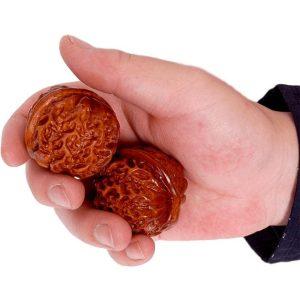
Each ball measures approximately 4.5 centimeters in diameter, sized so an adult hand can hold both simultaneously and maintain controlled rotation. The rosewood grain is visible beneath a light natural finish with no lacquer coating, preserving direct skin contact with the wood. Total weight for the pair is approximately 90 grams, present enough to register in the hand without fatiguing the wrist during sustained use. The surface polishes naturally with movement, developing a personal patina over time. The pair is presented in a fitted storage box.
Qi Gong health balls are rotated continuously in one hand, the two balls moving in opposing circles driven by the fingers and palm. The standard practice is to maintain rotation without the balls touching each other, which requires sustained micro-adjustments from the intrinsic muscles of the hand and wrist. Begin with slow rotation in the dominant hand, then the non-dominant, then reverse direction. Ten minutes daily is a recognized starting point in traditional Chinese health practice. The balls can be used anywhere: at a desk, while reading, or during any activity that leaves one hand free.
The practice of rotating paired balls in the hand, known as Baoding balls after the city in Hebei province where metal versions became standardized, is recorded in Chinese medicine texts from the Ming dynasty and remains taught in parks and community health settings across China. Rosewood versions draw from the older tradition of dense hardwood objects shaped for daily handling, predating the metal standardization of the Baoding form. The natural oils in rosewood contribute to a durability unusual among organic materials; well-maintained pairs pass between generations.
Do these balls make sound like traditional metal health balls? Unlike hollow metal Baoding balls, which typically contain a chime mechanism, these solid rosewood balls produce only the natural sound of wood on wood when the surfaces touch. This makes them quieter and more suited to shared spaces, offices, or any setting where the chime of metal balls would be disruptive.