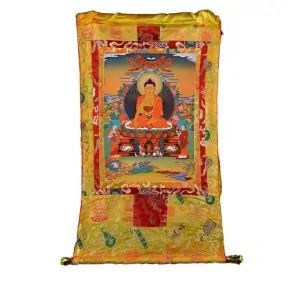
Shakyamuni Buddha Thangka Painting
€132.00
Shakyamuni Buddha thangka painting on handwoven cotton, hand-painted with mineral pigments including azurite, malachite, and cinnabar, mounted on silk brocade with wooden rods, viewing area approximately 45 x 60 cm. Made in the Kathmandu Valley tradition following iconographic grids over a thousand years old, each scroll is a singular hand-painted object.
EU orders: flat €3 customs duty (EU reform July 2026). Paid directly to the EU — no markup by Artisan d'Asie. Waived on orders ≥ €150.
Free shipping on orders over €80!
- Satisfaction Guaranteed
- No Hassle Refunds
- Secure Payments
Description
The Shakyamuni Buddha thangka painting is a hand-painted scroll on handwoven cotton depicting the historical Buddha in the earth-touching mudra, the gesture in which he calls the earth to witness his enlightenment. Painted with mineral pigments in the Kathmandu Valley tradition and mounted on silk brocade with wooden hanging rods, this is a devotional object made in living lineage.
The painting surface is handwoven cotton primed with chalk and animal glue, stretched taut before a brushstroke is placed. Mineral pigments ground from azurite, malachite, and cinnabar are applied in dozens of layered passes, mixed with ox-hide glue to produce the depth and luminosity characteristic of traditional thangka work. The completed canvas is mounted onto a silk brocade border in deep burgundy and gold and fitted with wooden rods at top and bottom. Viewing area is approximately 45 x 60 cm; the full scroll with brocade measures approximately 70 x 90 cm. The matte finish allows the figures to remain crisp at close range. Weight is light enough to hang from a single nail.
Hang the thangka on a clean wall, using the wooden rod at the top. A single hook or nail at the correct height is sufficient. Traditional practice positions the scroll above eye level, so the viewer looks slightly upward at the central figure. Keep the scroll away from direct sunlight and moisture; mineral pigments are stable but silk brocade will fade under sustained UV exposure. To store, roll the thangka loosely around the bottom rod and wrap in clean cotton.
Thangka painting emerged from the monasteries of Tibet and Nepal as a portable vehicle for contemplative practice and iconographic instruction. The Shakyamuni tradition, depicting the historical Buddha, follows grids set down more than a thousand years ago in iconographic manuals still in use in Kathmandu Valley workshops. The proportions are not invented but measured: every element of the figure derives from a sacred geometry that has been transmitted intact across generations of painters.
How do I know if a thangka is authentically hand-painted? An authentic hand-painted thangka will show slight variations in line weight, visible layering of pigment at close inspection, and irregularity in the gold outlines that comes from brush technique rather than printing. Machine-printed thangkas have perfectly uniform dot patterns visible under magnification. Artisan d’Asie sources only hand-painted pieces directly from Kathmandu Valley workshops.
Additional information
| Title | Default Title |
|---|