Buying Guide: How to Choose Your Incense Sticks, Cones, and Spirals
Scent has the power to wake up the senses, set a particularly calming mood, or quiet the mind. The atmosphere you create depends a great deal on how you choose your incense. Quality should always come first, so you’re not breathing in a toxic smoke by mistake.
On the market, incense comes in several forms and compositions. What suits you depends on how you intend to use it.
Whether in Western or Asian culture, every kind of incense has its own character and meaning. By the end of this guide, you’ll know what you need to choose the incense that’s right for you.
The Origins of Burning Incense
Incense in Asia
In Asia, incense has been part of daily life for millennia. Often used for meditation, purifying the home, artistic inspiration, or funerals, its fragrance can serve a sacred or a practical purpose. Incense sticks are burned in Buddhist temples just as often as in shops and restaurants, but above all, at home.
In Asian culture, incense is believed to elevate the spirit, soothe the body, and clear the mind of negative energy. Burning incense is an everyday, widespread practice across many Asian countries; some even use it simply to measure the passing of time.
Nos Encens Naturels
Bois d'oud, santal, résines. Encens naturels, sans parfum de synthèse.
Voir les encens →Incense in the West
In the Western world, burning incense is nothing new. The practice has existed for centuries within certain religions, such as Christianity, where a smoking censer is carried and swung through the aisles of a church, its fragrance meant to draw worshippers deeper into prayer.
The practice is also part of many magical rites. In the modern era, incense is used to mask unwanted odors. It also helps people fall asleep or create a calm, zen atmosphere in daily life.
Those familiar with Asian culture have also used it in scientific research. Incense has reportedly been studied for use as an aphrodisiac or for relaxation.
Types of Incense
In the conventional Western market, incense generally comes in three forms, differing in convenience, burn time, or simply appearance.
Incense Sticks
Our Grade 5 oud wood incense sticks and Grade 4 are sourced directly from Vietnam and Cambodia.
Sticks are very common, and their convenience appeals to a lot of people. They’re easy to store and take up very little space. They need a suitable holder to burn evenly and stay upright. Widely used in India and China, incense sticks are often made from raw, natural materials. That said, check before buying, since some cheaper sticks are made from solvent-based compounds coated onto a bamboo core rather than true natural incense.
Incense Cones
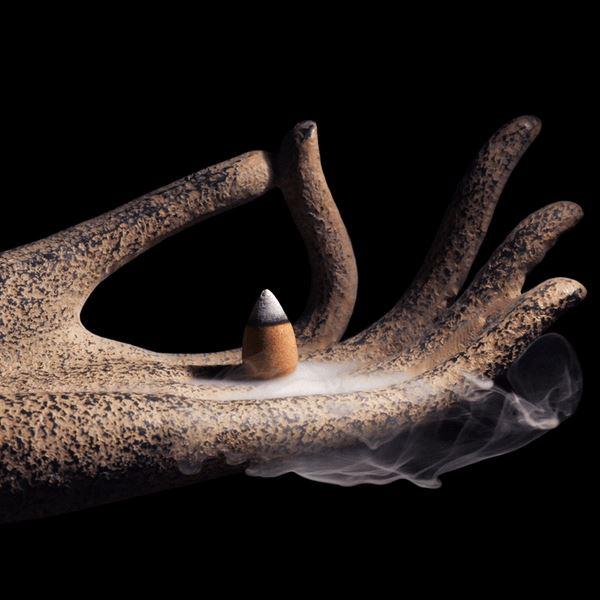
Cones are just as convenient and easy to store. They’re less familiar to Western buyers, but the effect is the same. Made from wood or resin, their form is more compact and discreet. To burn a cone, simply place it on a metal or ceramic dish and let it burn safely; some incense holders are purpose-built for this, like our traditional ceramic incense holders.
Incense Spirals
Spirals are the choice if you want fragrance to fill a space for a longer stretch of time. A single spiral burns for roughly 24 hours, which makes it especially useful for long meditation sessions. Spiral incense needs a specific stand to hold it balanced and let it burn continuously.
Which Composition to Choose?
Incense is generally made from natural woods or plants known for their medicinal and therapeutic properties. Here are a few examples:
Oud Wood
Oud is the gold standard raw material for incense. It’s nicknamed the “wood of the gods,” and also known as agarwood, aloeswood, or eaglewood, or more commonly as calambac. Its natural properties have been used for millennia in Chinese and Japanese medicine. It’s among the most precious woods in the world, and its harvesting and export are now fairly tightly regulated.
When oud wood reacts to natural or induced factors, it produces a resin with a distinctive, strong scent that affects mood and mental state. Oud incense is used for meditation, relaxation, and calming both body and mind.
Sandalwood
Sandalwood carries deep spiritual meaning across many cultures. In Hinduism, it’s linked to the third eye, and it’s used as an offering in Buddhism. It’s one of the three “essential” incense woods, alongside agarwood and clove.
At home, its delicate scent keeps insects away. On a mental and physical level, sandalwood brings an immense sense of wellbeing and calm. Its properties are also valued in Eastern medicine and used in cosmetics.
Clove
Discovered in the East and the Mediterranean since ancient times, clove is a spice used across many fields for its medicinal and therapeutic properties.
Clove acts as a powerful antidepressant targeting the central nervous system. It’s also used as a purifier. Burning clove incense is also said to help clear negative energy and cleanse the aura.
Some traditions hold that clove has the power to attract wealth.
White Sage
White sage’s natural properties are highly valued in health practices. It’s a very effective antiseptic and a well-known antibacterial. Its scent, when burned, is believed to clear negativity and cleanse the home.
Three Mistakes to Avoid
The many uses of incense have given rise to a highly lucrative market offering products of every kind and quality. It’s easy for a newcomer to get lost and end up with a product that doesn’t do what they hoped, or worse.
1. Don’t Buy Cheap Incense
Buying cheap incense online risks exposing you to toxic smoke, since you don’t know what’s actually in it. The substances in low-cost incense often carry harmful effects for the lungs, even when the scent itself can be deceptively pleasant. People with sensitive lungs, whether asthmatic or otherwise, should be especially careful about their choice of incense.
Compare prices, but more importantly, understand what a genuinely 100% natural incense typically costs. Sandalwood and oud wood incense carry a fairly significant production cost; keep that in mind before you buy.
2. Favor Natural Ingredients
Some incense is made from bamboo sticks dipped in a chemical mixture, such as benzene or naphthalene, which can mimic the appearance and scent of natural incense while producing far less desirable effects.
Fortunately for consumers, product packaging is a useful source of information. Choose 100% natural compositions, free of additives or chemical treatment. Sawdust, saltpeter, and charcoal fillers are also worth avoiding.
3. Read Customer Reviews
Buying incense in a physical shop makes this easy, since you can read the ingredients on the packaging. Online, it’s more complicated: you’re relying on the product description alone.
Customer reviews on a product page are always a helpful guide to making the right choice. There are also plenty of discussion forums where people share firsthand accounts of how a particular incense performs.
At Artisan d’Asie, we offer 100% natural incense sourced from China, Vietnam, India, and Indonesia, made with care by small producers. If that interests you, take a look at our natural incense collection.