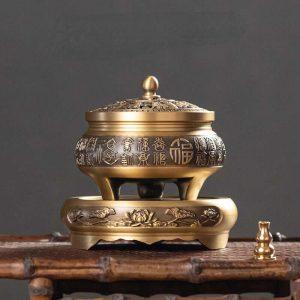
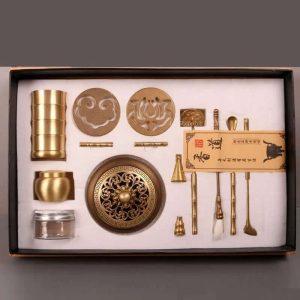
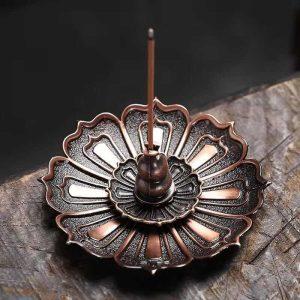
Antique Brass Crane & Phoenix Offering Tray
€99.00
Antique brass offering tray hand-engraved with crane and phoenix motifs by Chinese artisans, approximately 25 cm in diameter and 400 grams. Cast in solid brass with an antique patina finish, it is designed for altar and ritual use holding incense, candles, or offerings, and deepens in tone with regular handling.
EU orders: flat €3 customs duty (EU reform July 2026). Paid directly to the EU — no markup by Artisan d'Asie. Waived on orders ≥ €150.
Free shipping on orders over €80!
- Satisfaction Guaranteed
- No Hassle Refunds
- Secure Payments
Description
The antique brass crane and phoenix offering tray is a ritual object used to hold incense, candles, and devotional offerings on altars and in ceremonial spaces. Hand-engraved by Chinese artisans with crane and phoenix motifs, it arrives with a warm patina already established, reading as an object with history rather than one newly made. It is made for daily use in practice spaces, home altars, or as a statement piece in rooms that value decorative metalwork.
The tray is cast in solid brass and aged to a warm antique finish that deepens with handling. It measures approximately 25 cm in diameter and 3 cm in depth, with a flat central basin designed to hold incense or offerings without shifting. Weight is approximately 400 grams, providing stability on any surface. The hand-engraved crane and phoenix cover the entire upper face, each feather rendered individually with a fine chisel, producing a raised texture perceptible to the touch. The engraving technique originates in Zhejiang province workshops where iron chisels are passed between generations of metalworkers.
The tray is placed on a flat surface as the central element of an altar or offering arrangement. It holds incense cones, sticks secured in a holder, tea light candles, or loose offerings. The flat basin prevents objects from sliding; the low rim frames arrangements without obstructing them. It is stable enough for outdoor ceremony in still conditions and heavy enough that it will not shift during use.
Crane and phoenix pairings have appeared throughout Chinese ritual metalwork from the Han dynasty onward, forming a complete symbolic vocabulary: the crane represents longevity and immortality in Taoist cosmology, while the phoenix speaks to renewal and transformation. Together on a single surface, they address both continuity and change, making this pairing recurrent across altar objects, ceremonial vessels, and court decorative arts for over two thousand years.
A common buyer question: is the patina factory-applied or does it develop naturally? The antique finish is applied by the artisan to bring the brass to a warm, aged tone from the outset. With regular handling and use, the surface will continue to deepen and vary, concentrating warmth at areas of contact and developing a natural history of use over time.
Additional information
| Title | Default Title |
|---|